I'm writing a letter after more than two months.
Mainly because too much work happened, all wrapped and surrounded by hideous heatwaves and longing for rain.
This album makes for a great reminder of that atmosphere: small field recording performances by Kate Carr in parks near her home in London, during the same very dry and very hot summer of 2026, involving a handful of small instruments, "some collected, others I made, a phone app, bird horns, a Bluetooth speaker, and a lot of chance encounters," she writes in the album profile:
The pictures

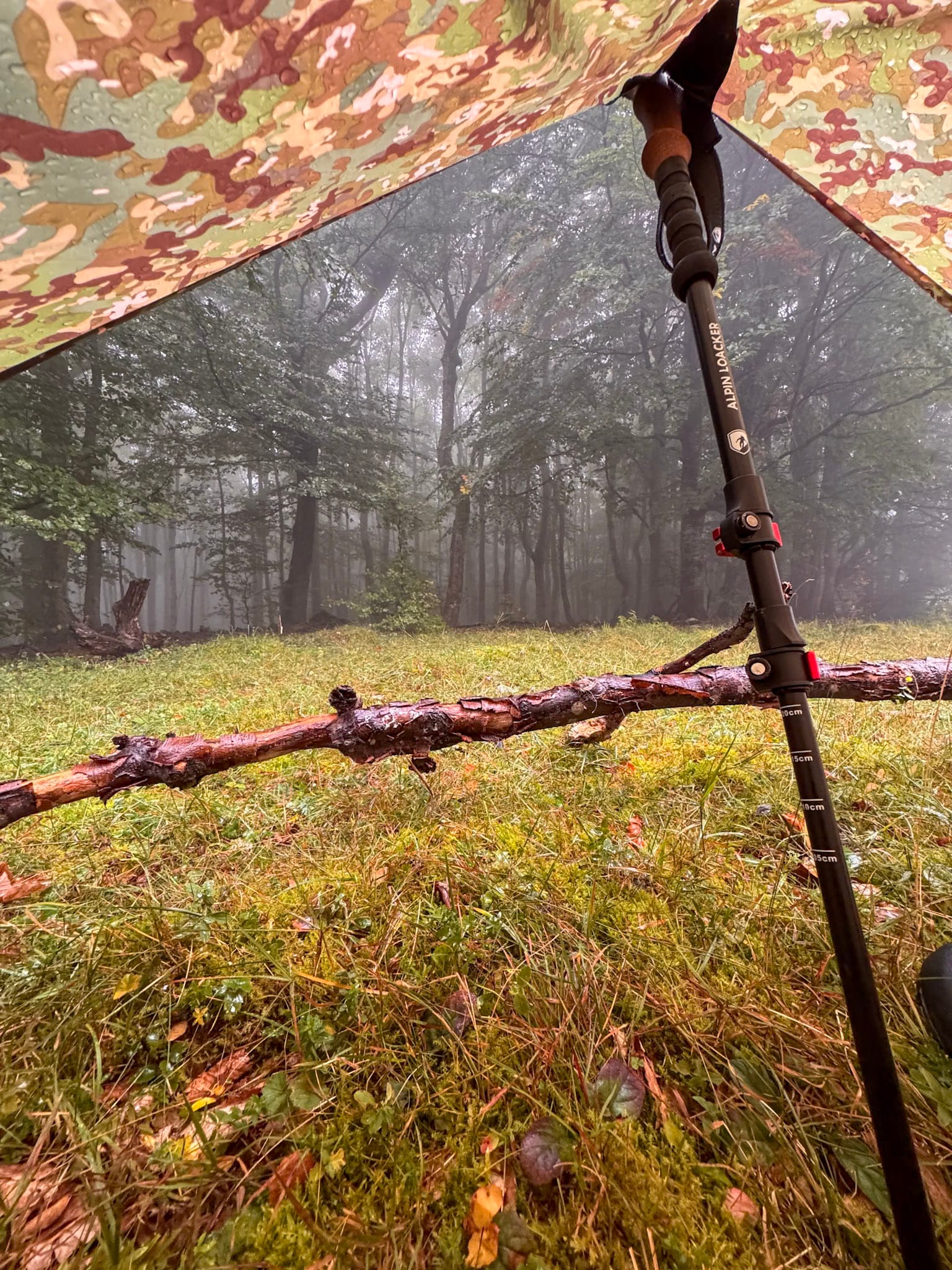
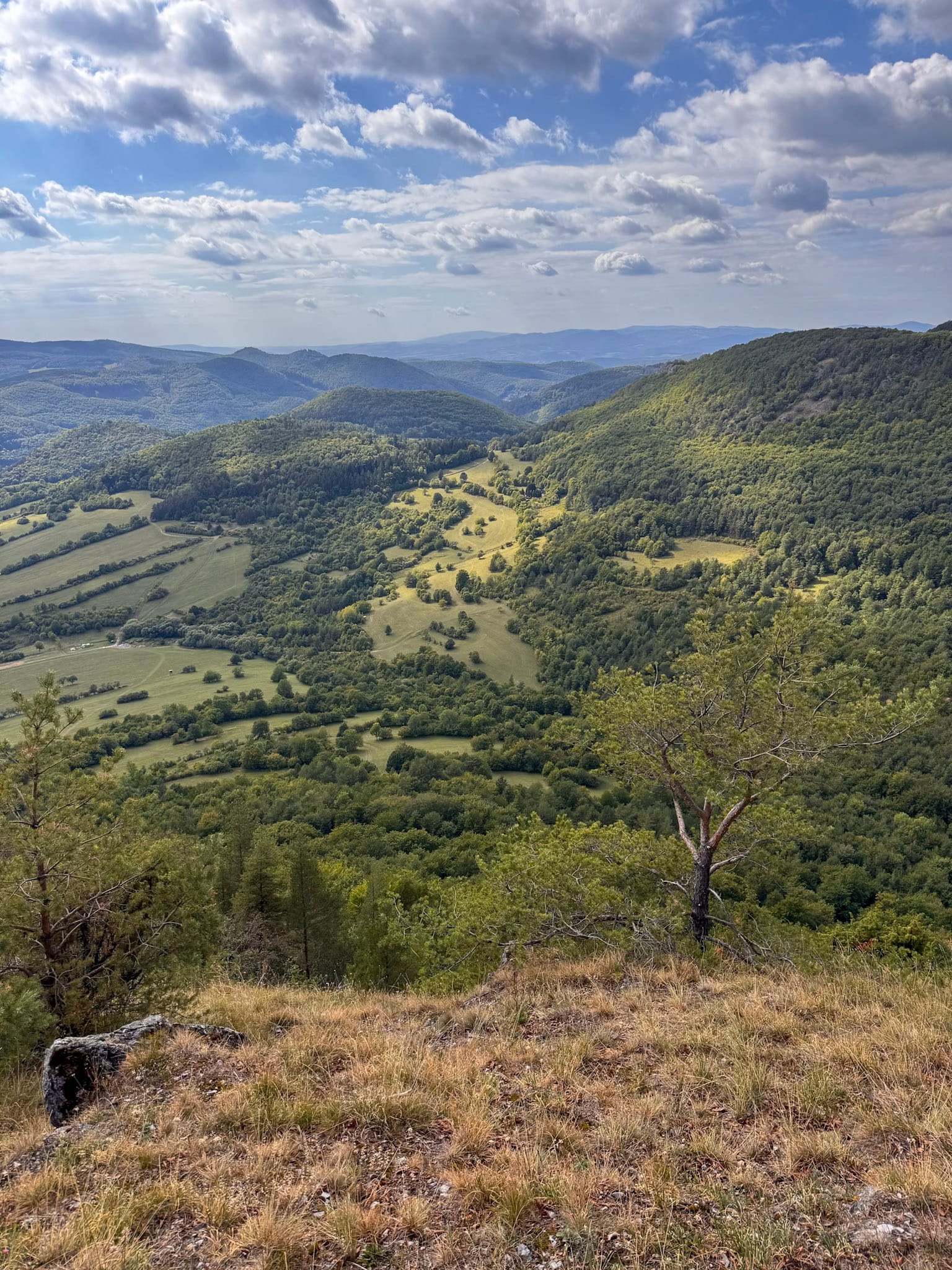
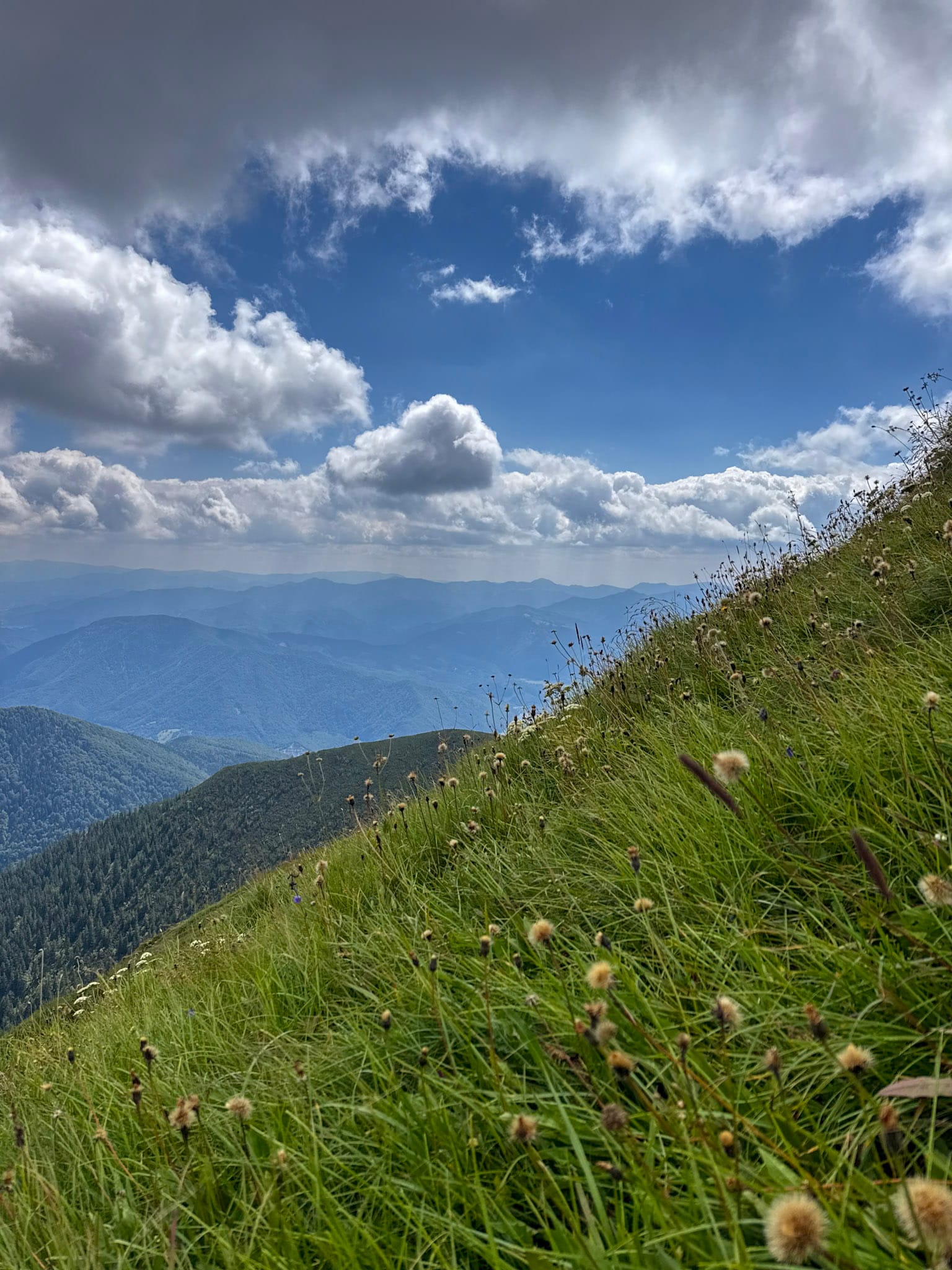
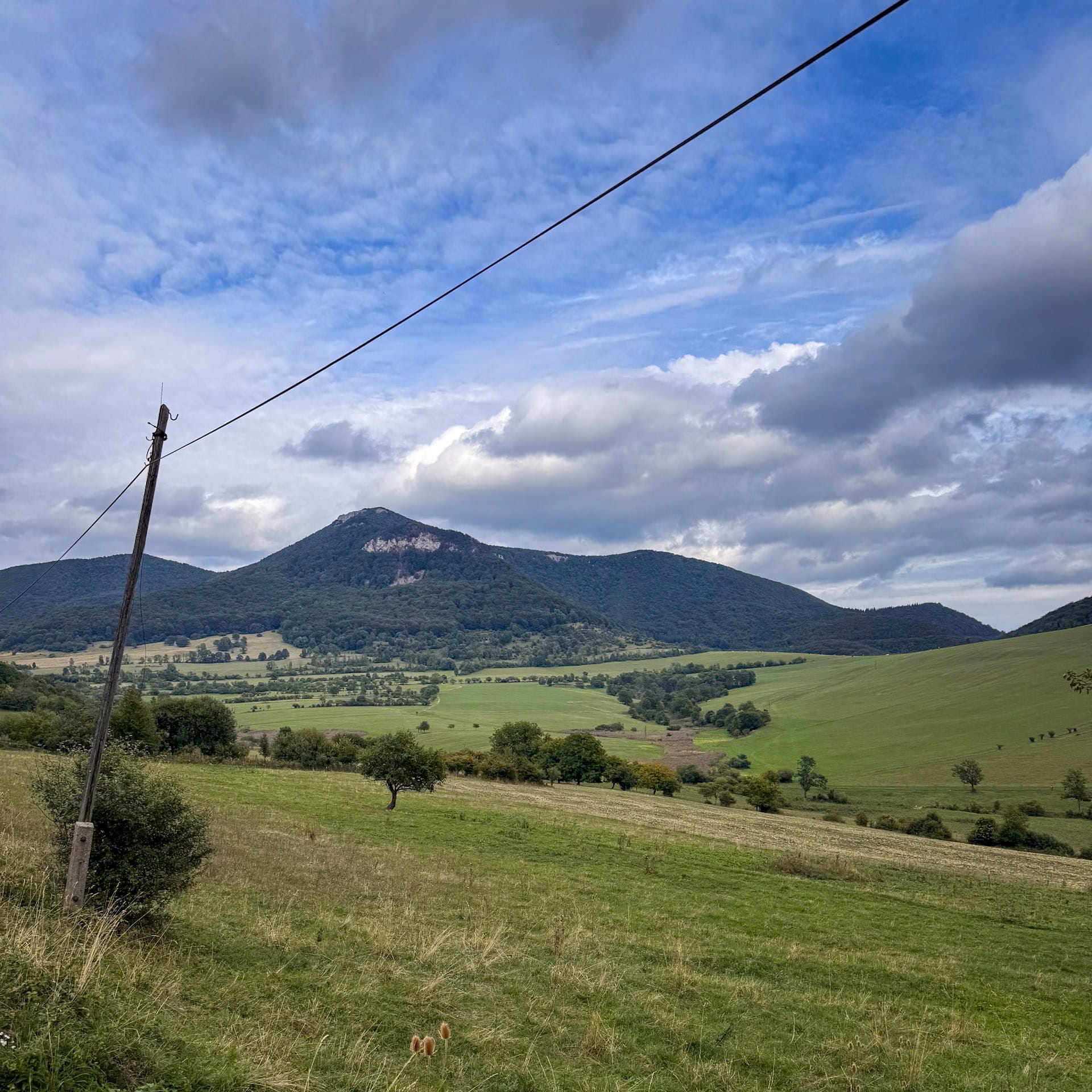
And since it was too hot, I travelled upwards when possible, into the mountains, to a thousand metres above sea level and higher, which is why this letter is full of postcards from trips to mountain ridges, forests and hill tops.
The talk
Back at the end of June I asked myself: wouldn't a different type of pressure help me develop or speed up thinking about my fav topics of memory systems and knowledge work in the age of AI?
Since I rely on the hypothesis that building in public leads to better work than building in private, then the natural step must be to talk about those topics in public, I realized.
There is a consulting/design/engineering company focusing on Human x AI symbiosis in Bratislava, Slovakia and they have an established talk/workshop platform, and an audience and a network, for giving a talk to.
Full disclosure, I have professional ties with this company, so had the privilege to pitch the idea, describing it as a summer afternoon talk about attention, giving a shit and maybe about inspiring others to care, in particular knowledge workers like designers, educators and managers, coders or builders.
The thesis

The easiest part was distilling the thesis, one I would feel confident talking about.
Designing the sequence in which to unfold the thesis turned out to be the hardest part.
I just knew I wanted to talk about the importance of the habits with which people approach and use the machine.
Meaning, why the interface between human and AI needs to include practice and we need to care about it.
By practice I mean routine, habits, everyday and conscious effort. Practice as a crucial part of the emerging paradigm of human interaction with AI.
Because practice is the place where we either maintain our cognitive autonomy or slowly hand it over to the machine.
The scene

The sequence design clicked, the story of the talk fell into place after settling on the opening scene: of a person (a user, a worker) living with AI and increasingly drawn into a mode of checks, coordination and decisions.
An overseer, spending more time checking outputs and deciding when and where to intervene. Being in ever more danger of losing his cognition & autonomy, becoming a condom for Claude.
But I am not that blunt, not here and not yet.
I say instead: look, the thinking that takes place outside our heads has arrived. It is called System 3, is named by Steven D. Shaw and Gideon Nave, and inspired by Daniel Kahneman's book Thinking, Fast and Slow, where he describes:
- System 1: fast, automatic, effortless and always running. 1 + 1, a partner's face, a bad feeling about something.
- System 2: slow, conscious, it costs effort, you switch it on when you need to calculate, compare, verify.
The problem, Shaw and Nave declare in their study Thinking — Fast, Slow, and Artificial, is the laziness of System 2, so when System 3 hands it a ready-made answer that looks reasonable, it gladly adopts it and gives up judgment.
Cognitive surrender.
The business case

At this point I illustrate the situation/premise via the shift in the business case for personal knowledge management:
Before LLMs and agents, the way you organise, store and meaningfully use everyday information significantly affected the quality of your work and your life.
Work and career in the knowledge economy depended to a large extent on the quality of your thinking, so if you wanted to succeed in the modern workplace, you needed
- to know why and, above all, how to learn,
- to know how to communicate in writing,
- and to be able to build and maintain an external memory, a second brain.
After the arrival of LLMs and agents, it still holds that the way you organise, store and meaningfully use everyday information significantly affects the quality of your work and your life.
Work and career still depend on the quality of your thinking, but today perhaps more than a career is at stake: whether you keep your thinking at all.
Thus, my argument goes, because reasoning and decision-making are being outsourced to AI, the practices around building external memory are becoming a safeguard against giving up thinking altogether:
- you still need to know why and, above all, how to learn,
- to keep communicating in your own written words and never stop,
- and to be able to build and maintain an external memory, a second brain.
How to? We can/should go back to exactly what applied before: the old habits and methods are turning out to be enormously meaningful precisely in the era of LLMs and agents, because they all converge on one ability: to write, to reason in text, and to work with text.
Whoever writes not only prompts better, but is less prone to surrendering their judgment.
I'm old school in this sense, you see 😸
Your memory, thoughts and reasoning are limited without aids: you can't arrange a complicated thought into a line inside your head, you have to write it down. And thinking happens during the writing.
Which is why the middle of the talk is a return to the basics of how to take notes, but first focusing on how not to:
- linear notes in a notebook lock thoughts in place, as if carved, and if there's a connection between the idea at the bottom of page X and the one at the top of page Y, you won't see it,
- loose papers float without any way of telling how they relate,
- folders look tidy but every folder is a silo, and ideas in the real world rarely fit into clean categories,
- tags are better, but a thousand notes under one tag is just a big untidy pile.
What works better is something like Niklas Luhmann's Zettelkasten: cards linked to at least one other, and the whole thing growing as a network rather than an archive, the way the web and the neurons in your head are organised.
The rules for building this kind of non-linear library are few:
- one idea per note = atomic,
- each note understandable on its own = autonomous,
- always link and say why you're linking,
- don't decide the structure in advance, let order emerge bottom-up,
- never delete,
- use your own words, because reformulating is the test of whether you understood, and the pleasant feeling disappears the moment you have to say it yourself.
The tension
I move to what the era of agents did to building a second brain, by pitching the two big questions of knowledge management:
- the problem of maintenance = who keeps the links current, who notices when an old claim has been superseded?
- the problem of synthesis = who will translate the inputs into their own words?
Before LLMs, we had never properly solved either problem.
Now a model can automate the maintenance that defeated every previous attempt, do the bookkeeping that humans abandon & to build a persistent, compounding artefact, the kind of artefact that people used to build by hand, often over decades, through the discipline of formulating everything themselves, at an enormous human cost.
For Niklas Luhmann, writing a permanent note was the thinking, and the friction of putting something into his own words was where he felt the gap in his understanding.
But the point is not about whether Zettelkasten or Karpathy's LLM wiki is better:
- whether fast track of LLM: synthesis and productivity, letting the system read, organise and link for you,
- or slow track of permanent notes: understanding and sanity, building your own formulations, an expanding attention span, noticing the small and simple.
They are two kinds of value or two speeds, each with its own trap: the fast one seduces you into surrendering judgment, the slow one on its own can't keep up.
The good question is not either/or, but how to balance the tension: to protect your own judgment and at the same time know when AI will/might really help you.
I suggest refusing help where your judgment is being formed and handing over the keys where knowledge works as infrastructure, and layering the two, because they don't exclude each other.
And that's it, from a self-appointed tension manager.
How it went
I fulfilled a dream: scared, but finally speaking in public about my beloved topics: the importance of writing, memory, language and building a second brain, while at the same time connecting all of it with the impact of AI.
In practice, I tested and developed the ideas I've been researching since working on the Mirage Mir newsletters, without tying them to a design-fiction artefact of the Mirage Mir story, or without referring to personal experience.
The platform's communication & media manager told me after the event how surprised he was by the interest the topic and the talk caused, attracting several dozen people in the audience, and further dozens following online.
It hit a certain need and/or feeling people have, a vector that is not yet fully formed or clearly named, he tried an explanation.
A few days later, I coined the term Zettelkasten Hauntology, so I can explore and define that need and feeling in more detail, but it definitely includes:
- several mutually related types of emotions,
- including the nostalgia for "lost futures",
- or sadness over the unused bicycles for the mind growing even stronger: instead of a new culture internet brought new forms of consumption and distribution of information and in recent years tools burst into the world to which you can hand over the very essence of reasoning, decision-making, autonomy,
- wistfulness about how "attending to the spectacle" takes away our time and focus,
- the fear that AI will actually work excellently and because of that society will begin to split into (at least) two groups of people with incomparable possibilities.
But in the end, all of that haunting enables me to imagine optimistic, hopeful futures. I don't feel like being scared of the future, not all the time.
Although strenuous and uncomfortable, let us please find the courage to do important work.
The unexpected reunion
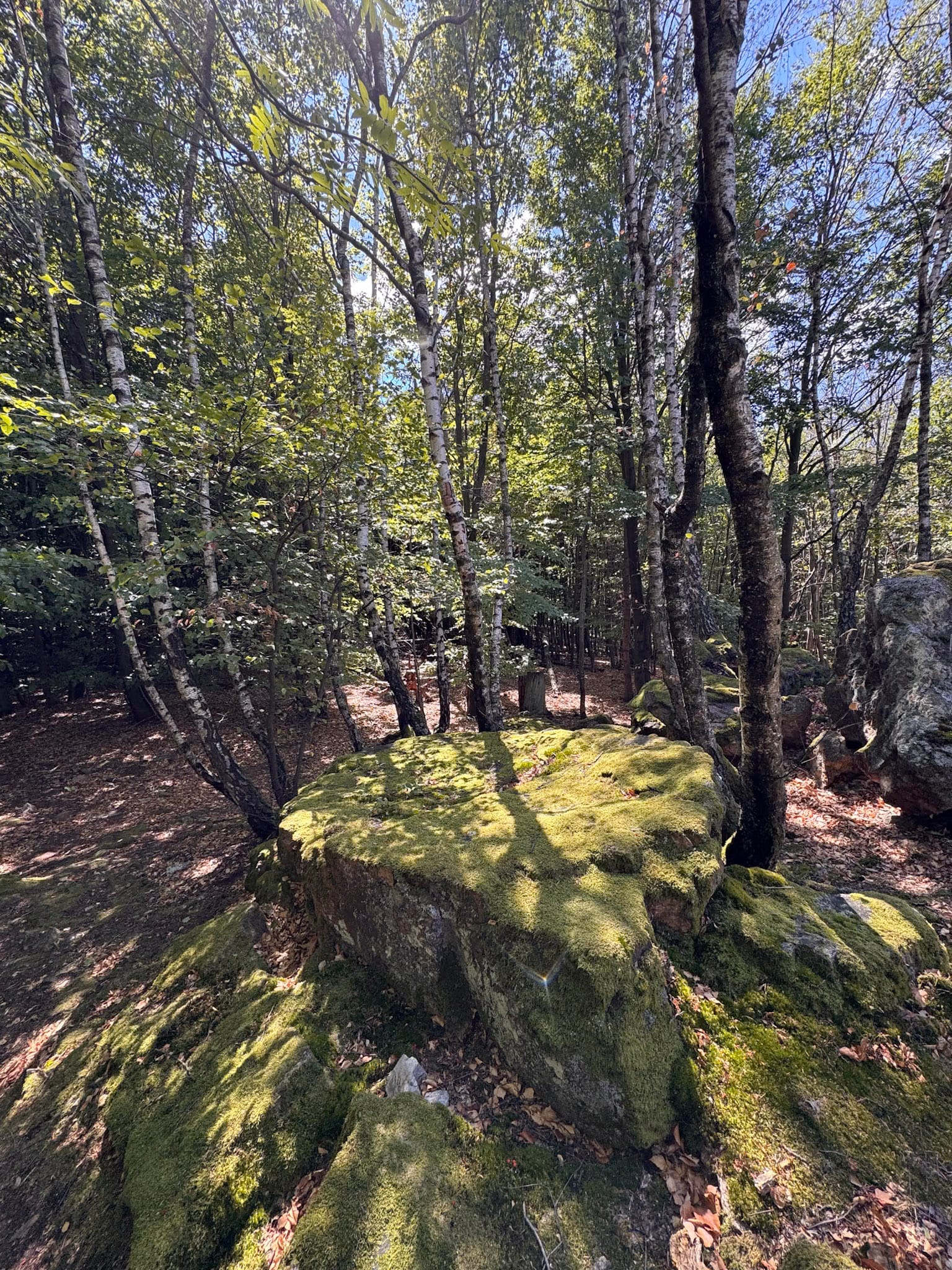
However, the most unexpected outcome of giving the talk, or perhaps the loveliest: after many years I got back in touch with a friend from primary school, whom I had long since considered lost in the depths of the wide world.
The image of us walking together for hours through the forests of the Tribeč mountains, telling each other crazy sci-fi stories and calling those trips The Wapiti Hunts, that memory had come to seem unreal.
But it was real, because there is only one person in the universe who could send me a message that goes like this:
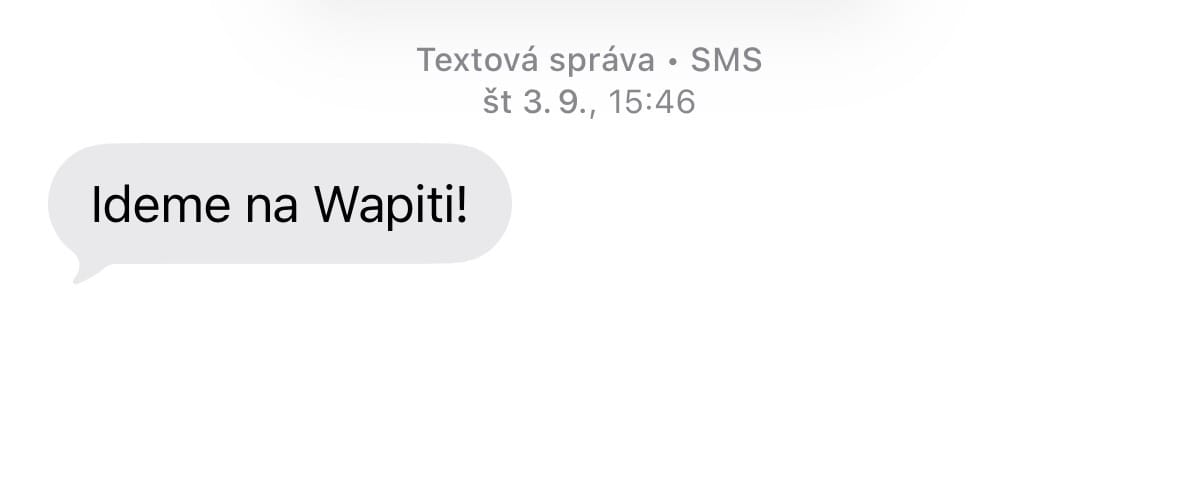
Inscrutable are the ways of the Lord, because a mention of my name and the talk in some post on LinkedIn caused the reconnection.
That said, my long-term career goal remains deleting my LinkedIn profile 🤓
Part two

Given the time available, it became clear to me that it wouldn't be possible to dive into the practical side, into demonstrations of how to actually build and maintain a second brain, with or without agents.
Many in the audience confirmed this: they would very much like to hear that practical detail, too.
So the second part is in progress, to be held at the beginning of October, in which I plan to focus precisely on those practical details.
The praxis!
(I'll send you an invite if you want)
Slow publishing, and a party announcement
Regarding the story: over the summer I managed to write about nine thousand words, but I'm enjoying the progress & editing too much to publish them yet.
Very much like the concept of the Mirage Mir Book itself: you can already read thousands of words (almost twenty thousand at the time of writing this), and yet I can and will add and move things around, because the story isn't published in the classic, bookish sense. It grows.
Although I do, of course, long for the classic & bound form as well. Reading on paper produces a completely different effect, a different experience.
So the idea is to make a few hardback prints of the story + maybe a few t-shirts with fav sentences and throw a First Version Release Party in early December.
Would you like to come? It would be great and you're very welcome.
The date is December 4th.
And the place will have a decent sound system, food & drinks.
Stay tuned for more details.
Thanks for reading and take care,
Peter