A letter on robotic librarians, knitting your own yoghurt and embracing whimsy
. . .
The topics I like to write about here just got a new chapter & push: courtesy of Andrej Karpathy.
His new idea moves the conversation about cognitive surrender, the importance of human mental effort and practice, the design of knowledge bases, and generally working with technology in the AI era.

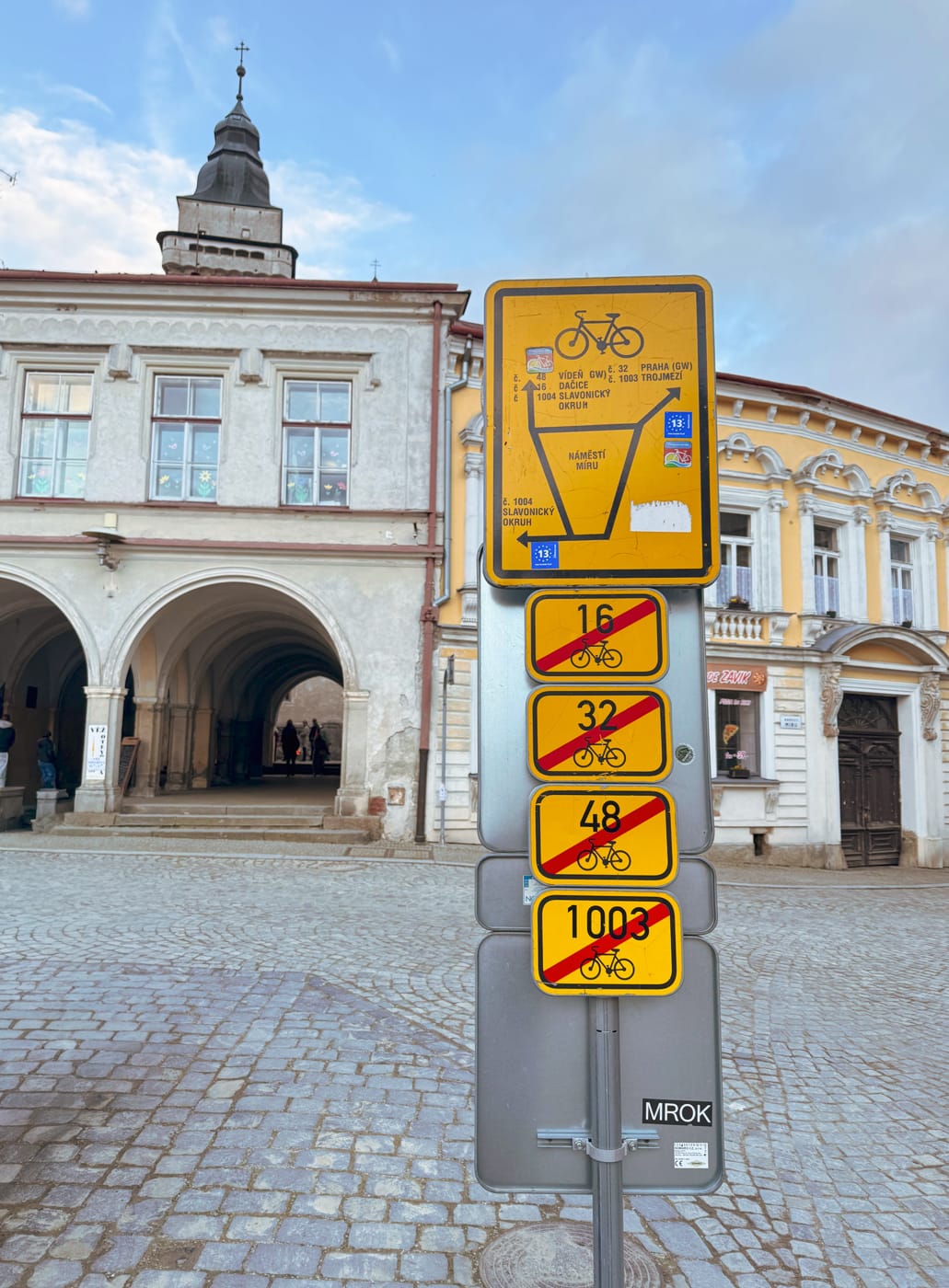
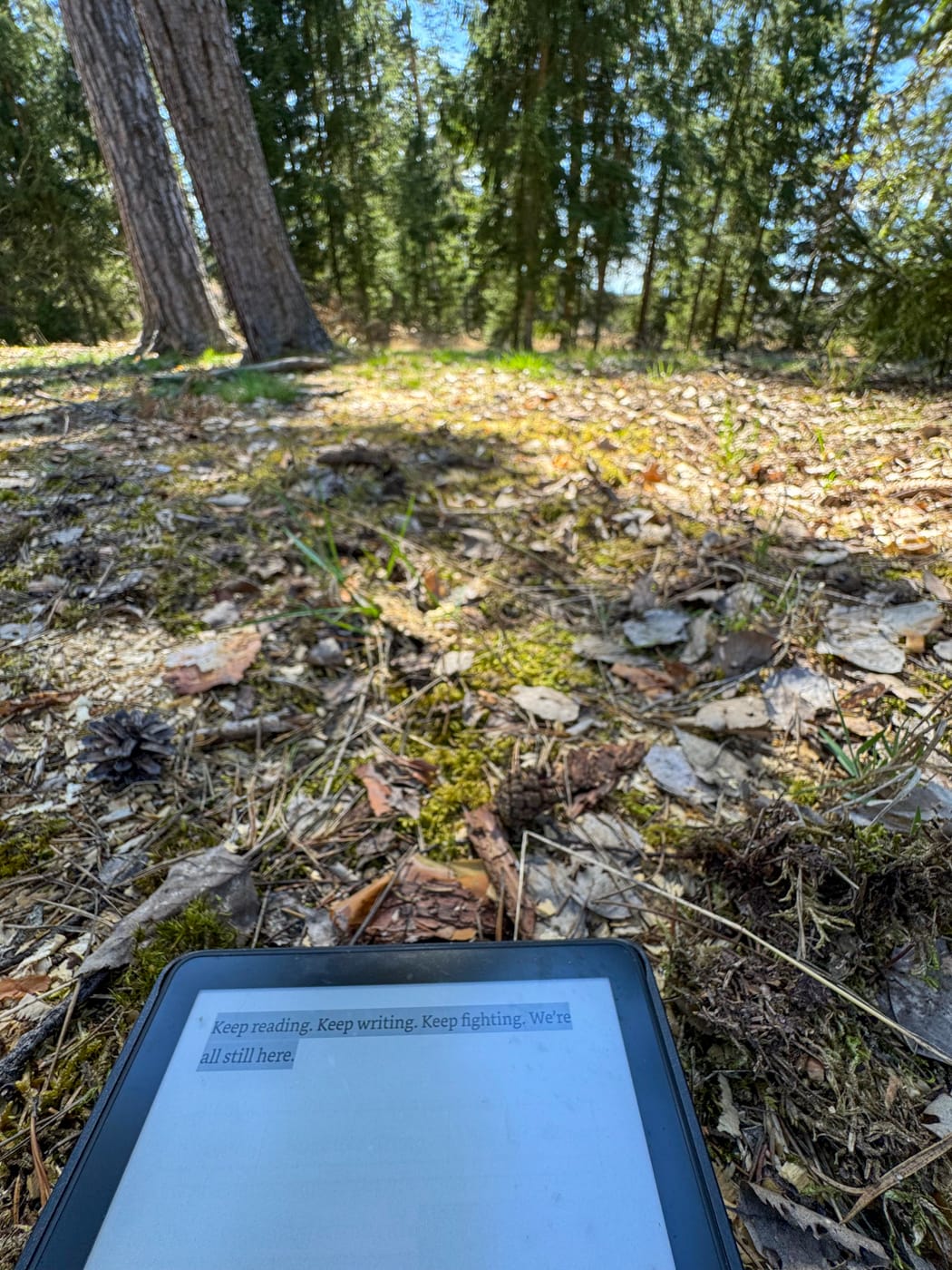
PS: The pictures in this letter come from a trip along the Austrian–Czech borderlands, researching the route the protagonists of my story might have travelled sometime in early summer 1993, for a new chapter of the story.
It will be the part where young Mira Melko becomes the companion, translator/interpreter and tour manager of a German-Norwegian lawyer and legal scholar, Doctor Ursula Perhonen, on her bicycle journey to the annual Glass Bead Game of 1993.
Manipulating knowledge
But back to Andrej Karpathy and his idea.
Born in Bratislava, Slovakia, but he moved to Canada with his parents when fifteen. One of the most influential public educators on deep learning and large language models. Also known for co-founding OpenAI and leading Tesla's Autopilot computer-vision team.
The day I left a small town called Slavonice, he announced that he had shifted how he uses large language models, now spending that time manipulating knowledge.
And he introduced the concept of an LLM wiki. A simple design in which an AI actively maintains and edits a living repository of markdown files.
Bear with me for a short architecture overview: his wiki idea consists of three main parts = sources, wiki itself and the schema.
Raw sources = the immutable source of truth
The curated collection of sources. Articles, papers, images, original data files.
These are immutable = the model reads from them but is forbidden from modifying them.
The wiki = an overview, a synthesis
Summaries, entity pages, concept pages, comparisons.
The LLM writes it and you read it (use it).
A directory of LLM-generated markdown files = the LLM owns and maintains this layer = it creates pages, updates them when new sources arrive, maintains cross-references, and keeps everything consistent.
The schema = the system rules dictating formatting and behavior
The most interesting element, though, is the Schema.
It tells the machine what to do with any new piece of information: how to chew through it, process it, and what its downstream effects will be = the system rules:
- dictating formatting and behavior,
- defining the wiki's structure, conventions, and workflows.
Also: how to ingest a source, how to answer a query, how to maintain consistency across pages, what formats to use, what to prioritize.
In short, a method, or description, by which your large language model updates your knowledge base with every new piece of information.
Addressing the problem of maintenance
Karpathy's wiki is interesting because it addresses the open problem of synthesis and maintenance.
In 1945, Vannevar Bush imagined The Memex, a personal knowledge machine with associative trails between documents. Curated and optimized for the thinking of a single mind over time.
The part Bush could not solve was maintenance:
- Who keeps the trails current?
- Who updates the cross-references when new material arrives?
- Who notices when an old claim has been superseded?
Karpathy answers it is the schema who handles/automates that maintenance.
Addressing the problem of synthesis
The German sociologist Niklas Luhmann built a version of the Memex, his famous Zettelkasten: by hand and across 40 years, solving the synthesis problem through the discipline of personal formulation, but at an enormous human cost in maintenance labour.
He was explicit that simply copying quotes was useless. It was the act of translating someone else’s idea into your own formulation AKA rewriting, where understanding actually happens.

Luhmann considered the act of writing his permanent note, the Zettel, as the process of thinking.
The friction of having to express something you read, experienced, in your own words. The resistance you feel when your formulation exposes a gap in your understanding.
Karpathy’s system removes this friction: the LLM does the writing and Karpathy contributes curation and questions.
This kind of wiki accumulates a sophisticated, synthetic intelligence about a domain. But it is the robot synthesis of sources.
So you have a beautiful library, but have not done any thinking.

Making different bets about what a personal knowledge system is for
Karpathy’s bet is that the bottleneck is synthesis and retrieval = if you can build a system that organizes and connects a large domain of sources fast/itself, you can move faster or ask better questions, and build on a richer foundation than any individual working alone.
It’s powerful, and for many purposes: research, decision-making, domain mastery, etc...
Also for digital services, which never have a final state and serve different people across many situations.
Knowledge as infrastructure?
Luhmann’s bet is that the bottleneck is understanding = the value of a knowledge system comes from how deeply it has been integrated into a single mind that can generate new thoughts from it.
His Zettelkasten is designed to keep a mind in productive friction with its own prior work across a lifetime.
Karpathy’s system seems oriented toward domain-specific wikis built for specific research questions. This makes it a powerful research tool, but makes it a weaker lifetime intellectual companion.
The commanders & 100x managers
I think the topic of LLM personal knowledge base is appealing partly because you can harness something that, with a relatively simple prompt, can generate knowledge constructs that look extremely complex and remarkably deep.
It gives you a sense of wisdom, productivity, perspective, and control.
But because of this, the intensity or ratio of the human thinking work, doesn't actually increase, methinks.
See also: the rise of platforms that make the operator feel like they're commanding a fleet. Dashboards, org charts, agent hierarchies, budget controls, governance layers, etc...
It feels like management. You get the dopamine hit of delegation without the inconvenience of measuring whether the employess produced anything useful.
Check some of them, especially the language they use:
- https://github.com/paperclipai
- https://autoflowly.com/
- https://www.agentshelf.ai/
- https://alacritous.io/
Another and quite amusing explanation for the Allure of Agents: according to Venkatesh Rao, we all apparently yearn to do 100x more project management than we get to do, because other humans are annoying to delegate to, more than offloading the thinking is worth 😸
The tension
But seriously, you should/have to draw a sharp line around what you actually want to protect.
I think it's extremely risky to rely on a machine in the realm of understanding. Or to hand comprehension over to it.
I'm not talking right now about whether Zettelkasten or Karpathy's wiki is the better system. What I mean is the difference between the holy grail of productivity and the importance of protecting your own life, your own sanity.
I see them more as two different kinds of values or two different speeds.
The good question is how to balance that tension. The pull to be at the vanguard of technology (e.g. learn Claude Code) versus going analog and slow, expanding your attention span, reading books, learning to notice the small and the simple.
I see the virtues of both sets of values/speeds, as well as the pitfalls.
We are living through funny times, with people convincing you that robots will take your job in two years (Alarmist or correct? Dunno, but Kevin Kelly has something to say re: uncertain certainties).
On the other hand, the “slow life” elevated as a status symbol gains traction: brick phone, zero social media, knitting your own yoghurt & html, etc...
Why not, sure, but the world is changing and covering your ears and pretending otherwise won’t help.
The tension is real.
I agree that probably the hardest position to hold in the AI discourse right now is skepticism and enthusiasm both at once.
The bottleneck of wonder and whimsy
The real bottleneck imho? Pushing the frontier of good ideas, and your own passion/wonder and intrinsic motivation.
I'm not sure if humans are designed to operate in the speed & mode of Karpathy's wiki.
You don't need to know everything.
Just have fun if possible.
Embrace whimsy, as Spencer Nitkey suggests in his beautiful essay about the art of doing nothing.
Environment matters a lot, too, so try to be/move to where you flourish.
Because “a captain only shows during a storm,” as the Greeks say.
Thanks for reading and take care*
Peter
Related letters:
 Peter
Peter Peter
Peter