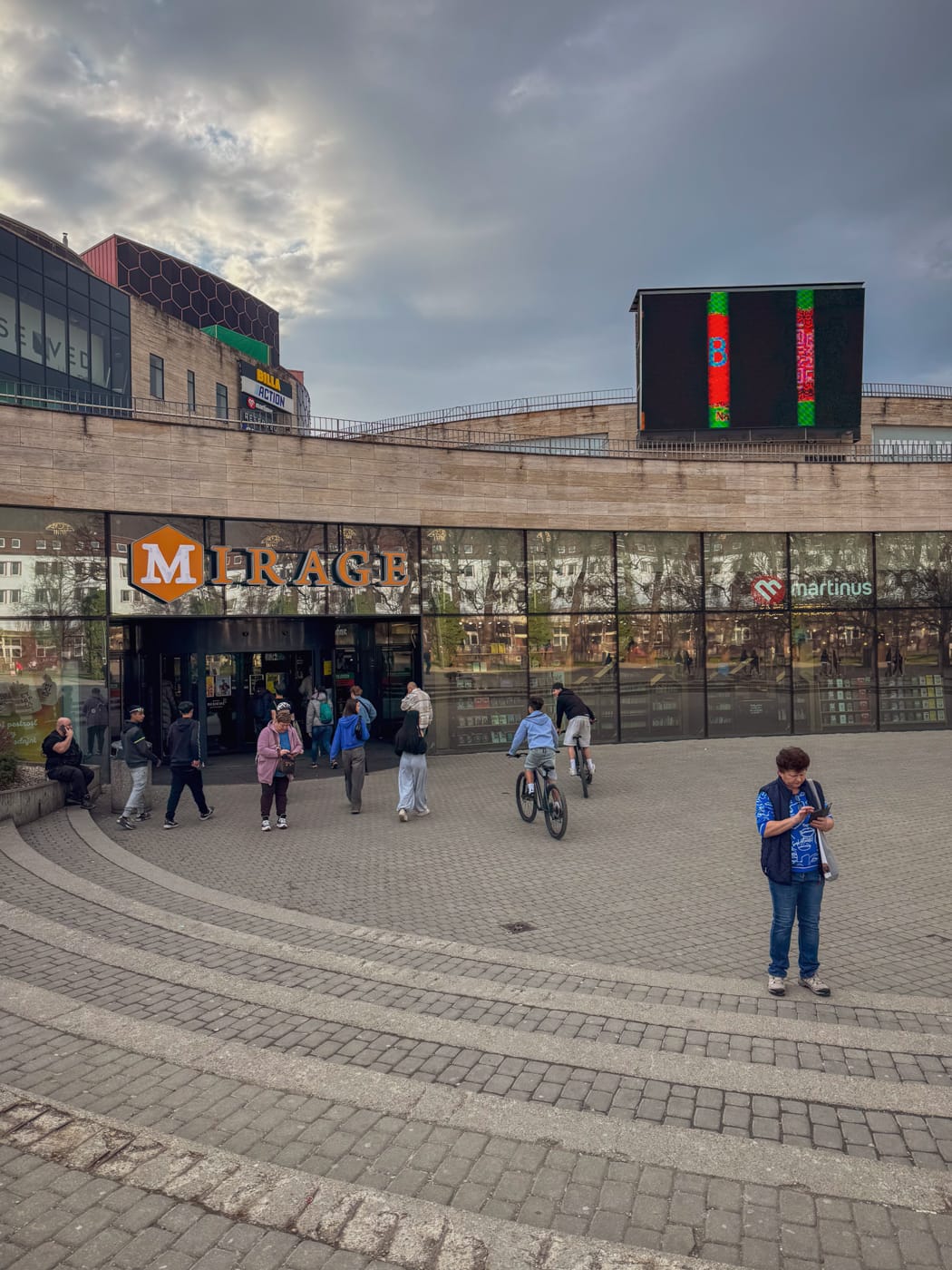
By the end of March, I promised myself to write and publish the next chapter of the Mirage Mir story.
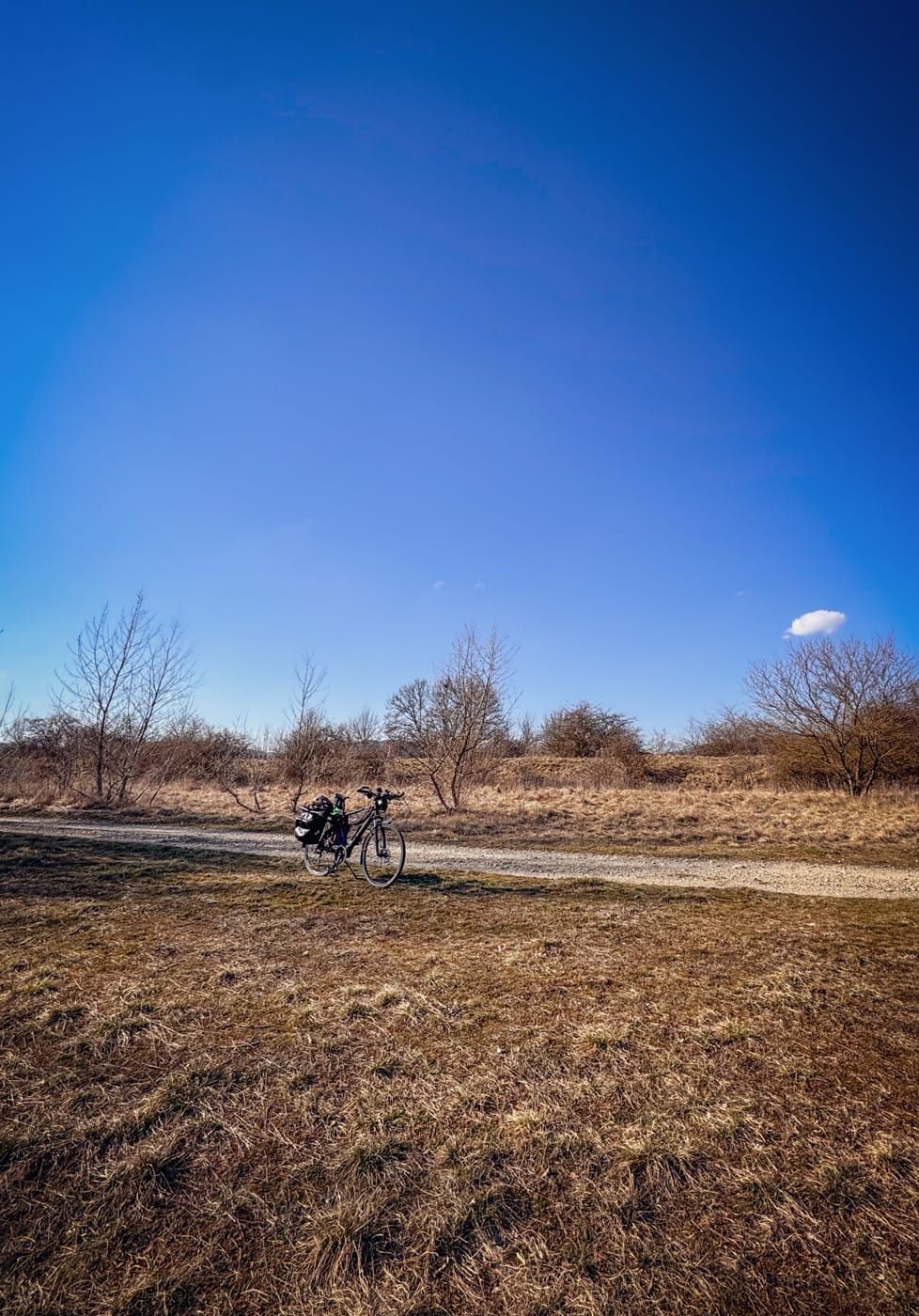
So I went to the best kind of office I have known in recent years: a route along a river that I can ride by bike, alone, while working on an idea/a text, with a book on hand to dip into every now and then.
This is a letter from that micro bicycle tour, two days and one night on the road, from Trenčín upstream along the river Váh, all the way to Žilina.
The setup & the venue
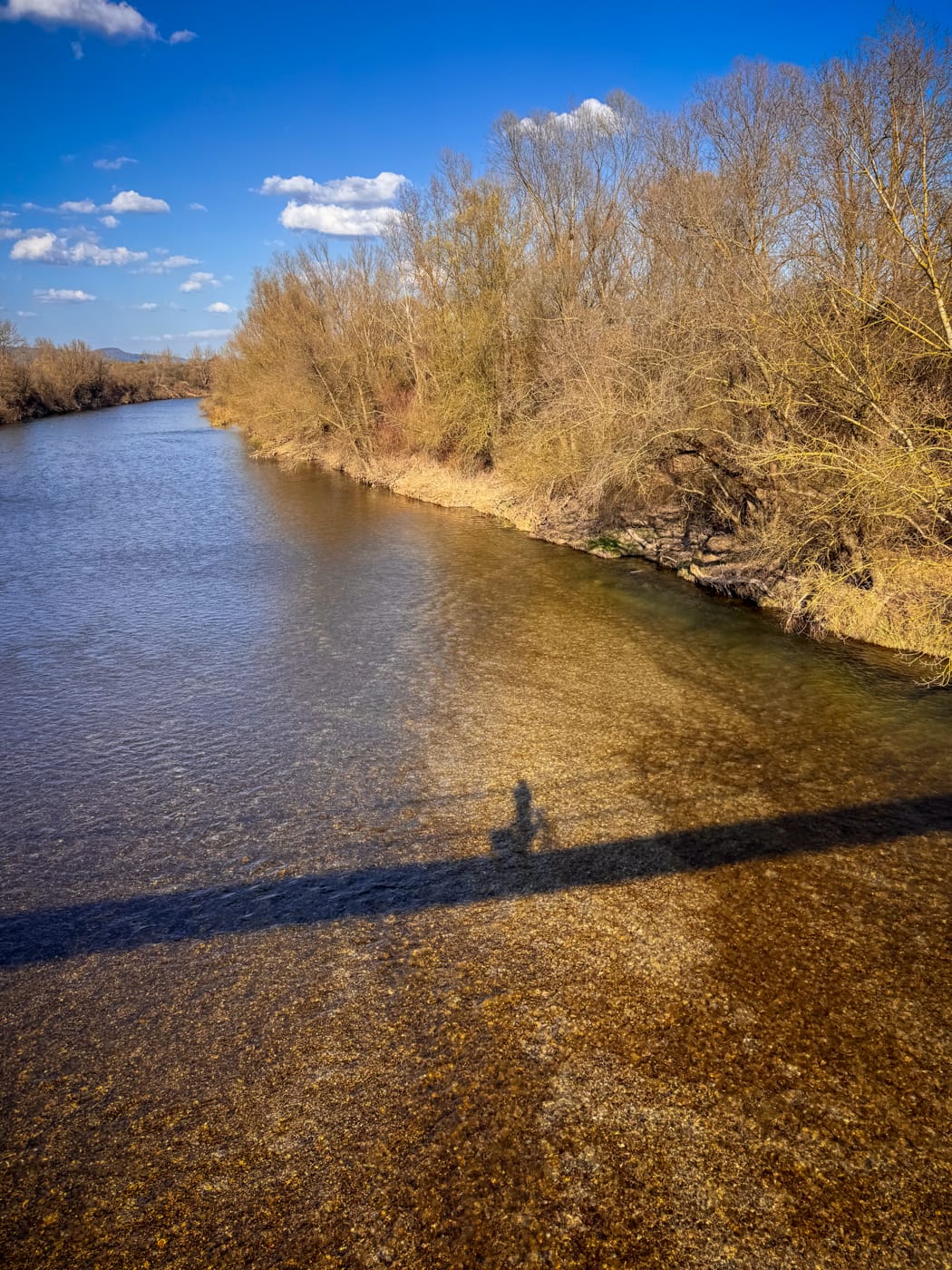
An old touring bike, a phone attached to the handlebars with a magnet, into which I dictate notes via Wispr Flow, and a beloved 13" Macbook Air M1 in the pannier bags, for editing the recorded notes.
Regarding dictation: the average person types at 40 words per minute but speaks at 130 to 160. When you try composing + thinking + typing at the same time, the speed drops even more, because your brain is splitting resources between ideation and motor control.
That gap is where the best ideas go to die.
So I talk & move through landscape, disguised as a longish distance cyclist.
River routes are especially suitable venues for this kind of workflow design, as they usually have a gentle gradient and moving doesn't require much effort 😅
The river & the substrate
Speaking of gradients...
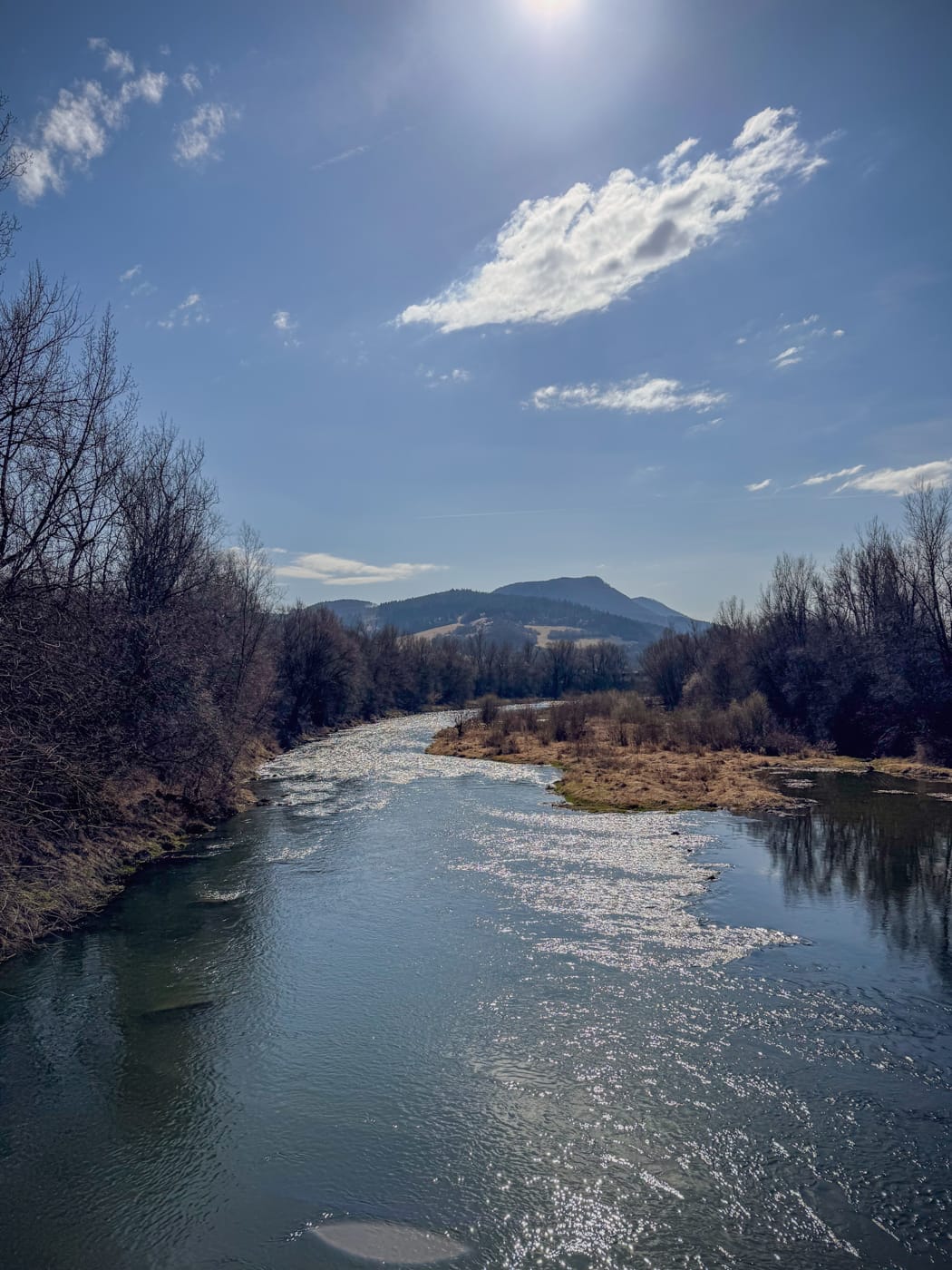
Haven't expected such an obvious source of epiphany, but the river itself becomes the spark for writing the chapter.
It's the image of water and the way it flows, the gradual descent of the current, the transfer of material from a higher position to a lower one.
That image leads me to an almost technical explanation of how they worked with substrate, in the alternative reality of the Cusarian Republic and Castalia:
- that this material acquires the best “computational” properties when gravitational forces act on its mass,
- and therefore physical installations are constructed like objects/terrains with a general tendency toward sliding.
Slopes, wavy bands of an inclined plane, or concave bowls.
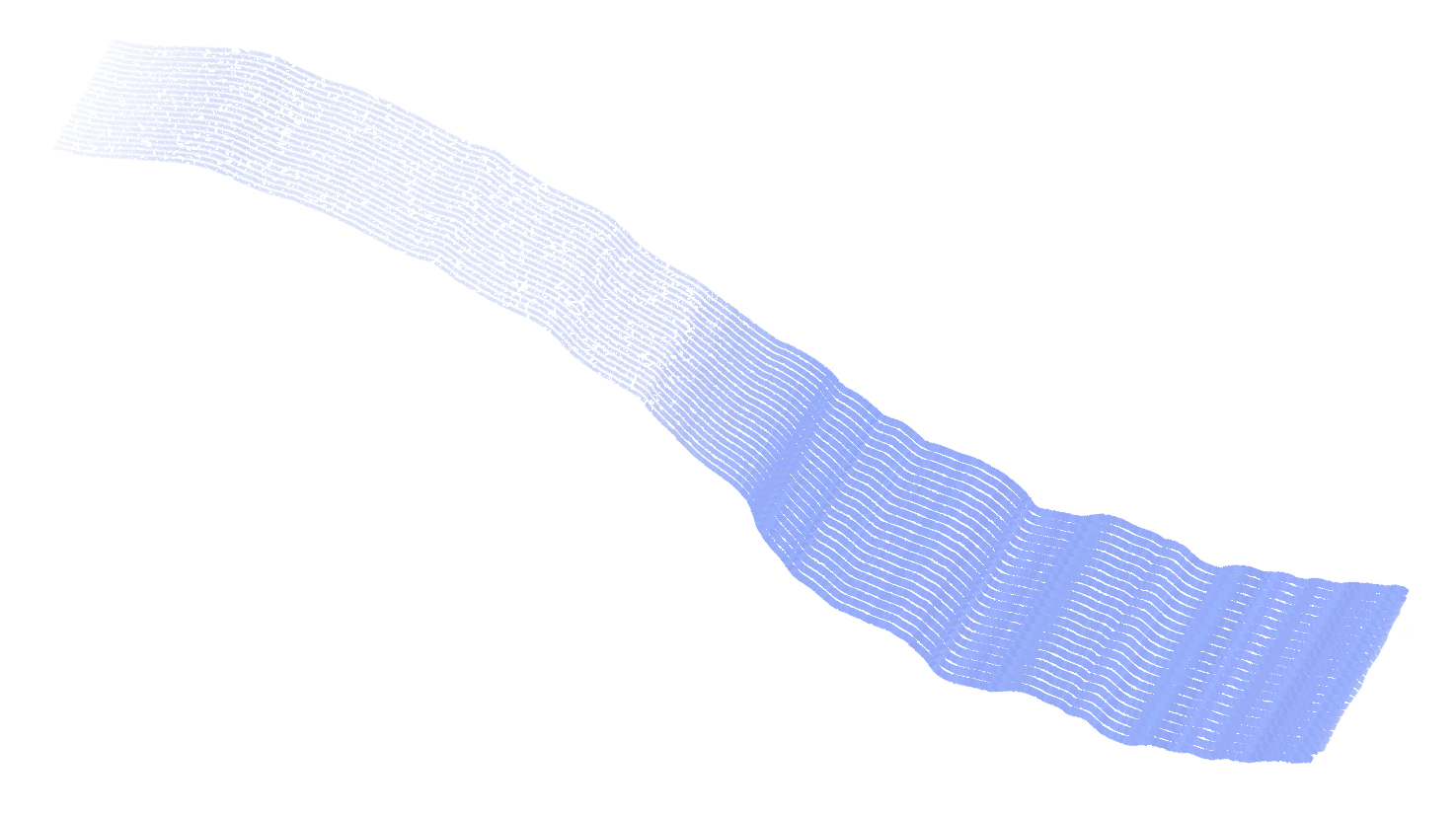
Substrate is a fictional technology and one of the important design fiction artefacts developed in the world of the Mirage Mir story.
Imagine substrate as a full stack: a processor completely merged with memory, and software with hardware as well: in its raw, unformatted state, sponge cake batter (substrate could be eaten, lol), materially like muscle, jelly, and sand all together.
Moreover, the substrate is able to create dynamic environments, generating from itself an environment visible to the naked eye and a simulation verifiable by touch, with shapes, surfaces, and details rendered at a granularity down to the subatomic level.
Such formatted substrate is said to have an active interface.
Based on that insight and from that point on, the draft of the new chapter clicks into place, yay!
The routes & the infowars
For fairly long stretches I ride outside the official routes marked as bike trails on the map, trying to be in an environment touched by civilization as little as possible.
Old roads lined with cobblestones, you meet almost no one on them, they run close to/right alongside the river, so you can go down to it whenever you want.
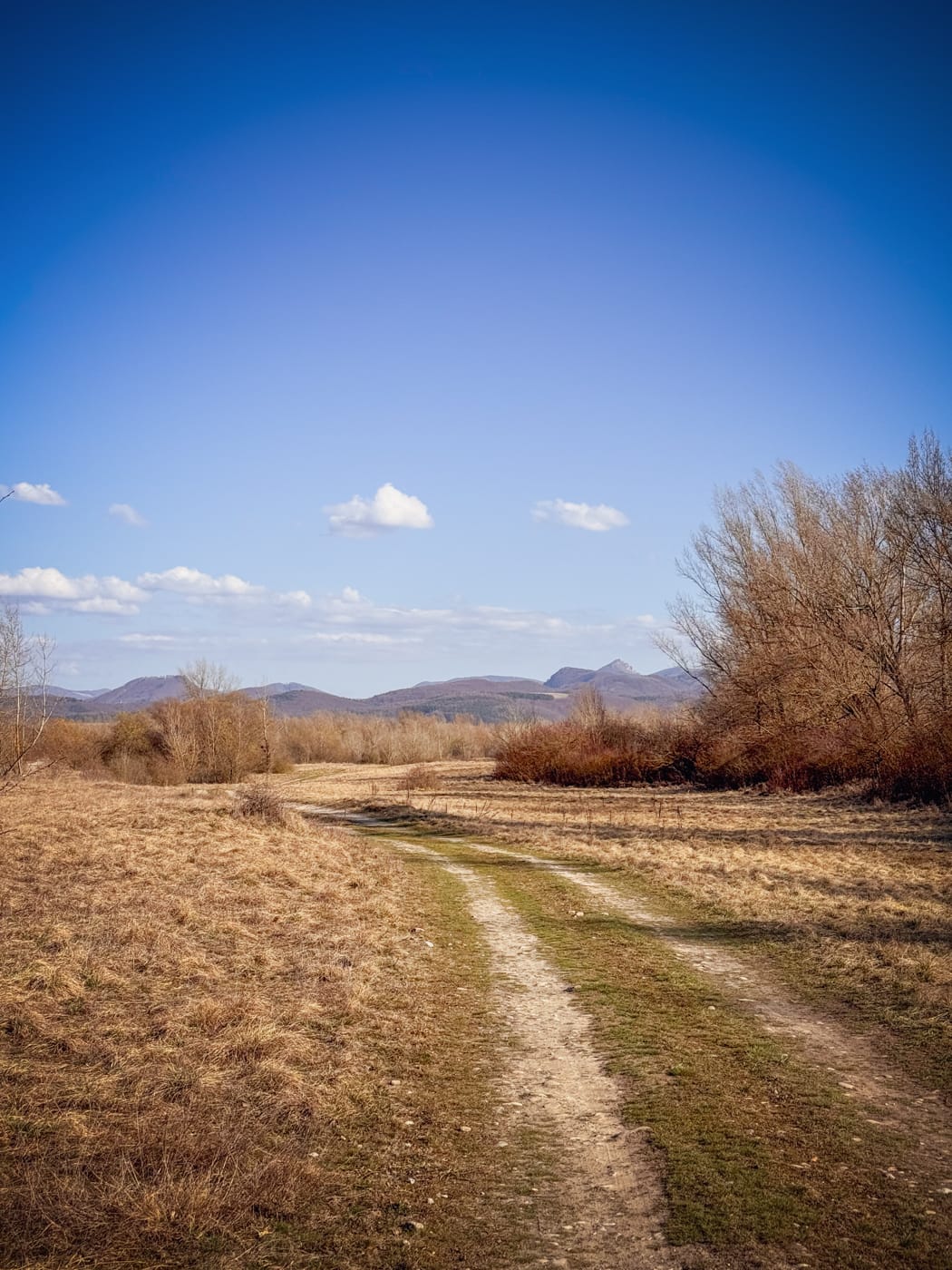
But you cannot avoid the signs of the age: the Váh region brings together the main transport arteries, and from time to time you have to cross/meet them: the D1 motorway or the railway corridor.
It creates interesting juxtapositions: the slow countryside and Carpathian capitalism in a single scene.
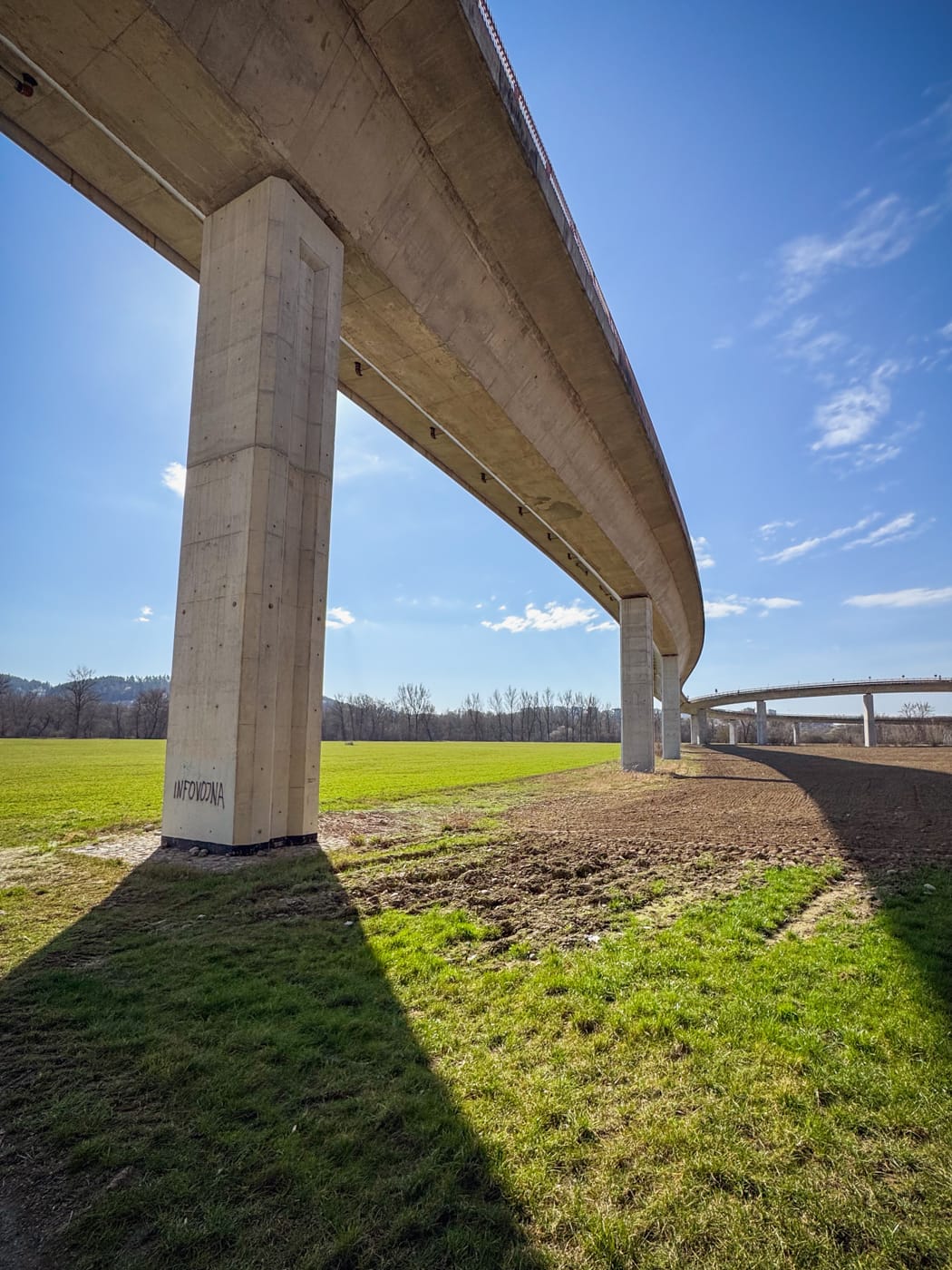
If I had to choose a postcard that captures the Považie region, the one above would certainly be in the top three: motorway viaducts stretching over fields, and beneath them the reality of people often vulnerable to online manipulation, a lone name of a conspiratorial media outlet on a viaduct pillar behind Považská Bystrica, within sight of the magnificent Manínska Gorge.
The peaks & the games
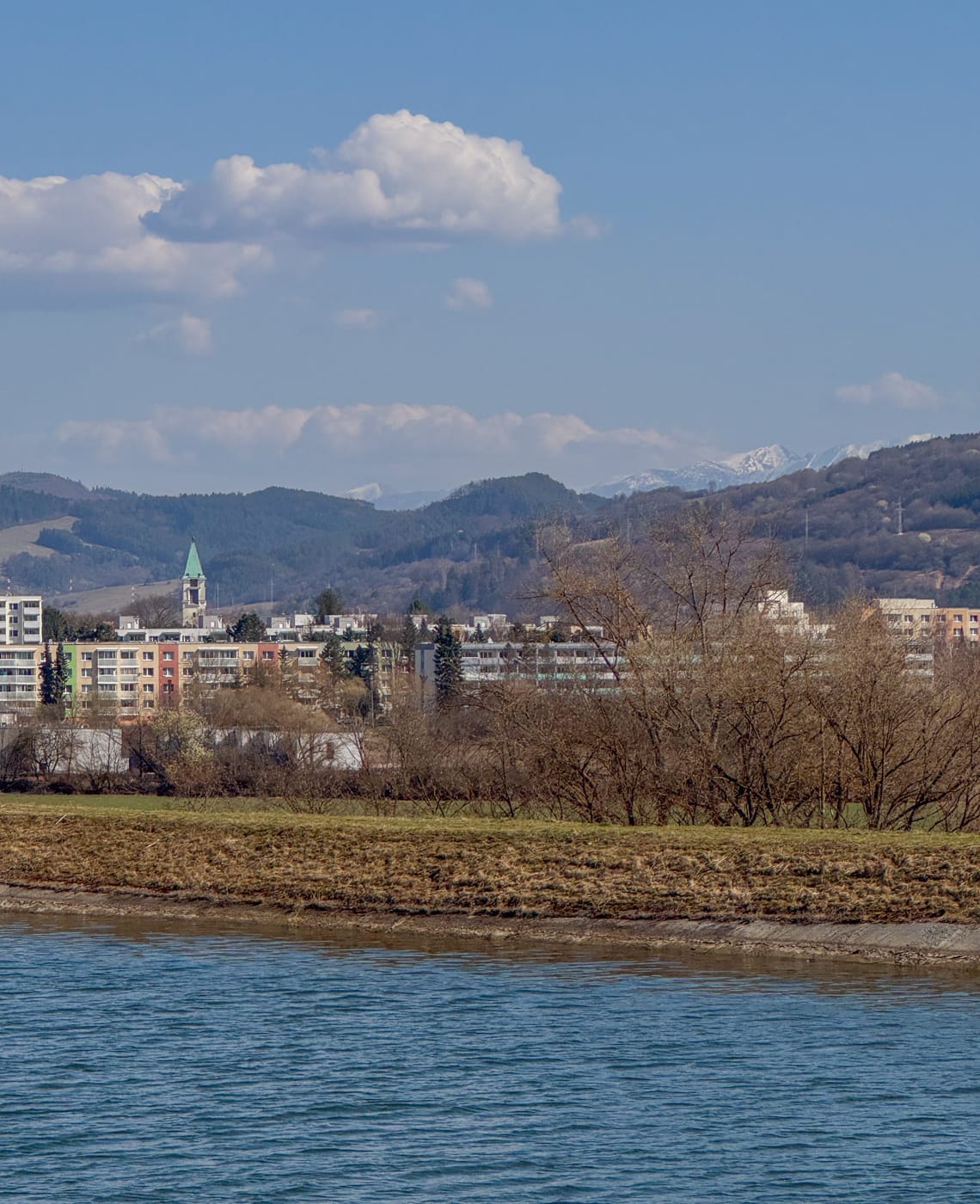
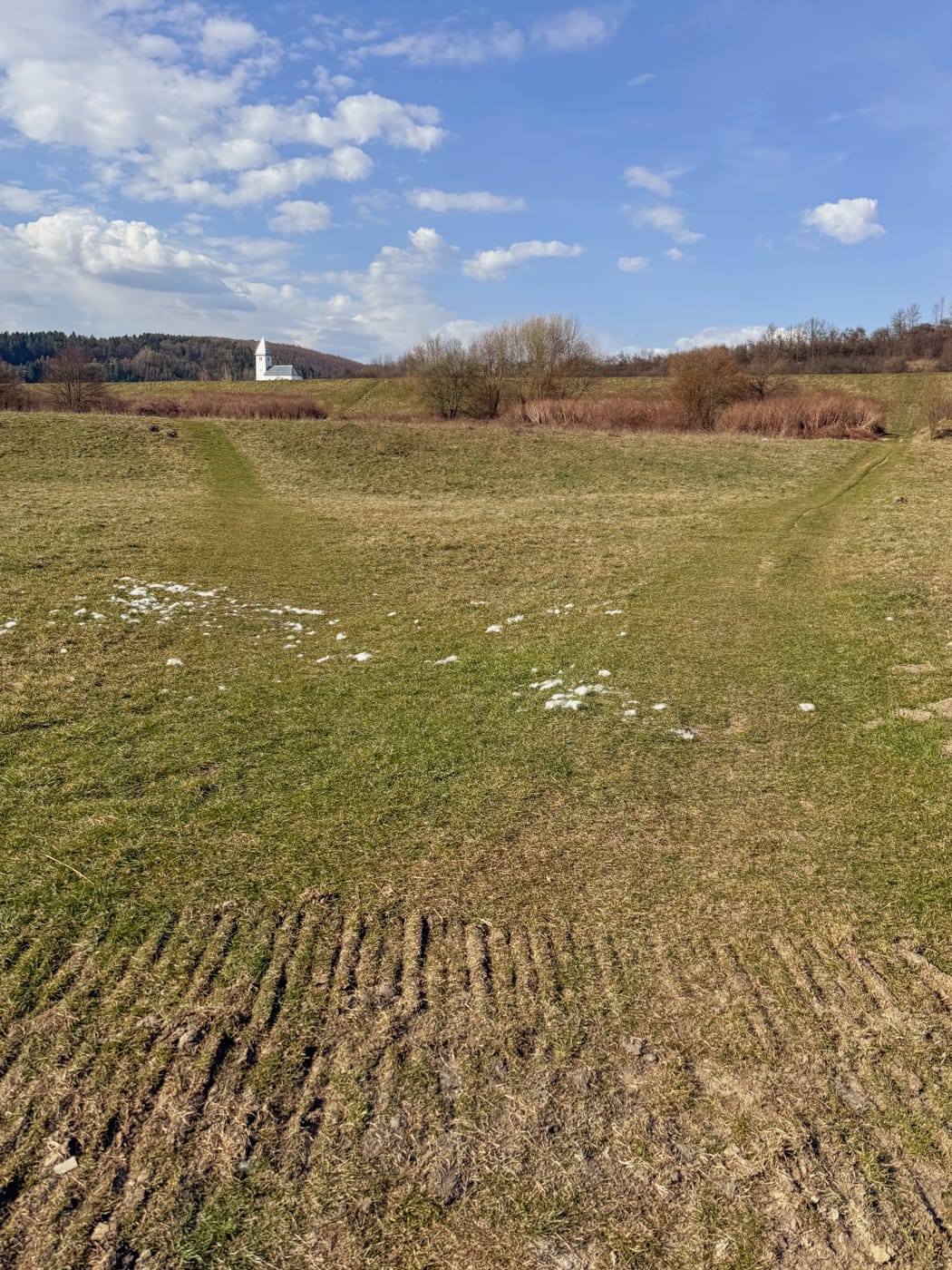
In spring, it is excellent to go against the flow of the Váh river toward the mountains, because you can experience that spot before the town of Bytča, when you finally catch sight of the still snow-covered peaks of Malá Fatra.
When I go for a ride with my kids, we usually ask ourselves so who we are now and we pick a backstory/shape, pretend to be trains for example, to make the journey more fun.
Although alone, I start a similar game here: I’m someone on the road to arrive at a certain place of longer stay, say to a city on a plateau high and deep in mountains the size of the Caucasus.
And it is a pilgrimage against the flow of the river, all the way from the lowlands to the plateau.
It certainly takes several days, I would say as much as two weeks, sometimes even three, depending on the weather, which can quickly worsen in the higher phases of the route.
At certain points or phases, you imagine what it will be like when you go back down this way, also making mental notes of where you might stop, or where to turn off, what to avoid.
There on the plateau you will spend spring, summer, and when it starts tipping into autumn, you will set out on the journey back.
The days are getting shorter.
But the journey is easier: you are going downhill, but at the same time harder, because you are carrying all the work and attention that you devoted on the plateau.
Perhaps you know it. You went up and down this route maybe thirteen years in a row. For many years now, this has been your life.
You spend autumn and winter in the city. And when spring comes, you leave for Waldzell, to Castalia, to study and play the Glass Bead Game.
The book & the letters
I like how reading a book while on a road creates a strange, intoxicating counterpoint: how the eyes switch between the flow of the landscape and the static, binary, and abstract space of the text.
I read This Is How You Lose the Time War during this trip, written by Amal El-Mohtar and Max Gladstone, following two enemy agents who travel back and forth through time to alter history on behalf of their warring empires, whose timelines are mutually exclusive.
The book is epic in scope: whole timelines are being manipulated, deleted, or intermingled with others = the underlying protagonist is time, which is one of the best protagonists. In speculative science fiction, at least.
Besides the book being a great story (it won Hugo, Nebula, Ignyte and Locus Awards for best novella), it beautifully resonates in what I am trying to do:
- writing letters,
- not writing detailed scenes, but story all plot.
Letters to burn before reading
This Is How You Lose the Time War is an epistolary novel = stitched together mainly from the letters two main protagonists send to each other.
Which feels especially fitting, since I’ve started writing and sending letters myself. You are reading one right now, actually 🥹
"PS. Socrates! I wonder if we knew any of the same ones."
Story all plot
The text of the novella is, to a large extent, plot shaved to the bone: in two or three sentences it tells a history that lasted ten years or a few lifetimes. One paragraph reveals or explains one whole war and its consequences.
“She watches the river, cautious, quiet, for seven months.”
I enjoy this technique, because it relates directly to/justify my writing: that I write or aspire to something between a Wikipedia poem or a weird Wired story.
The end
Oh yeah, you can read the new chapter here.
Thanks a lot for reading and take care 💚