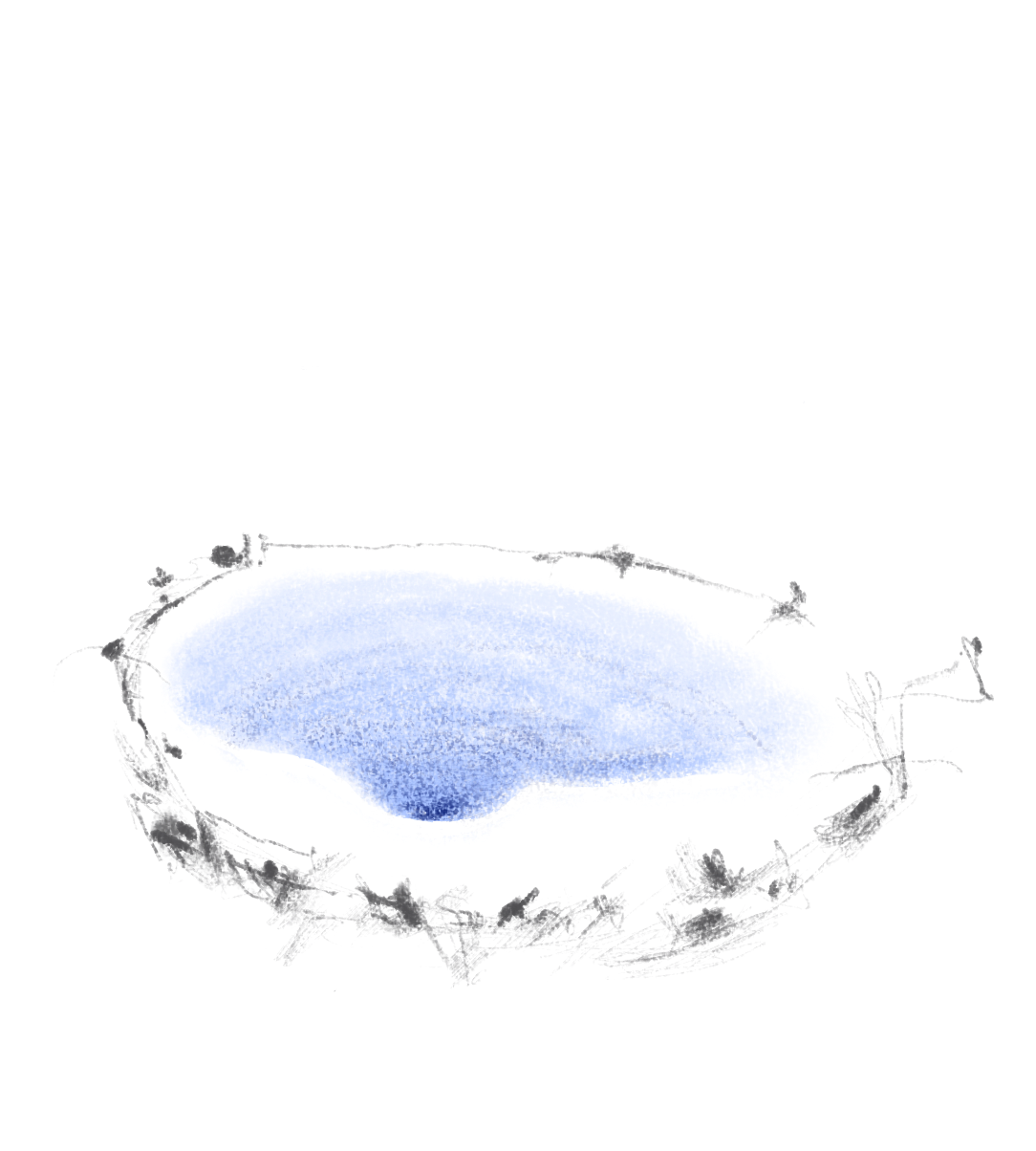
When the reader is ready, the book appears.
— Timrava to Mira Melko, taken from: The Collected Postcards 1994 - 2024
PART 1
Chapter 1: Tribeč
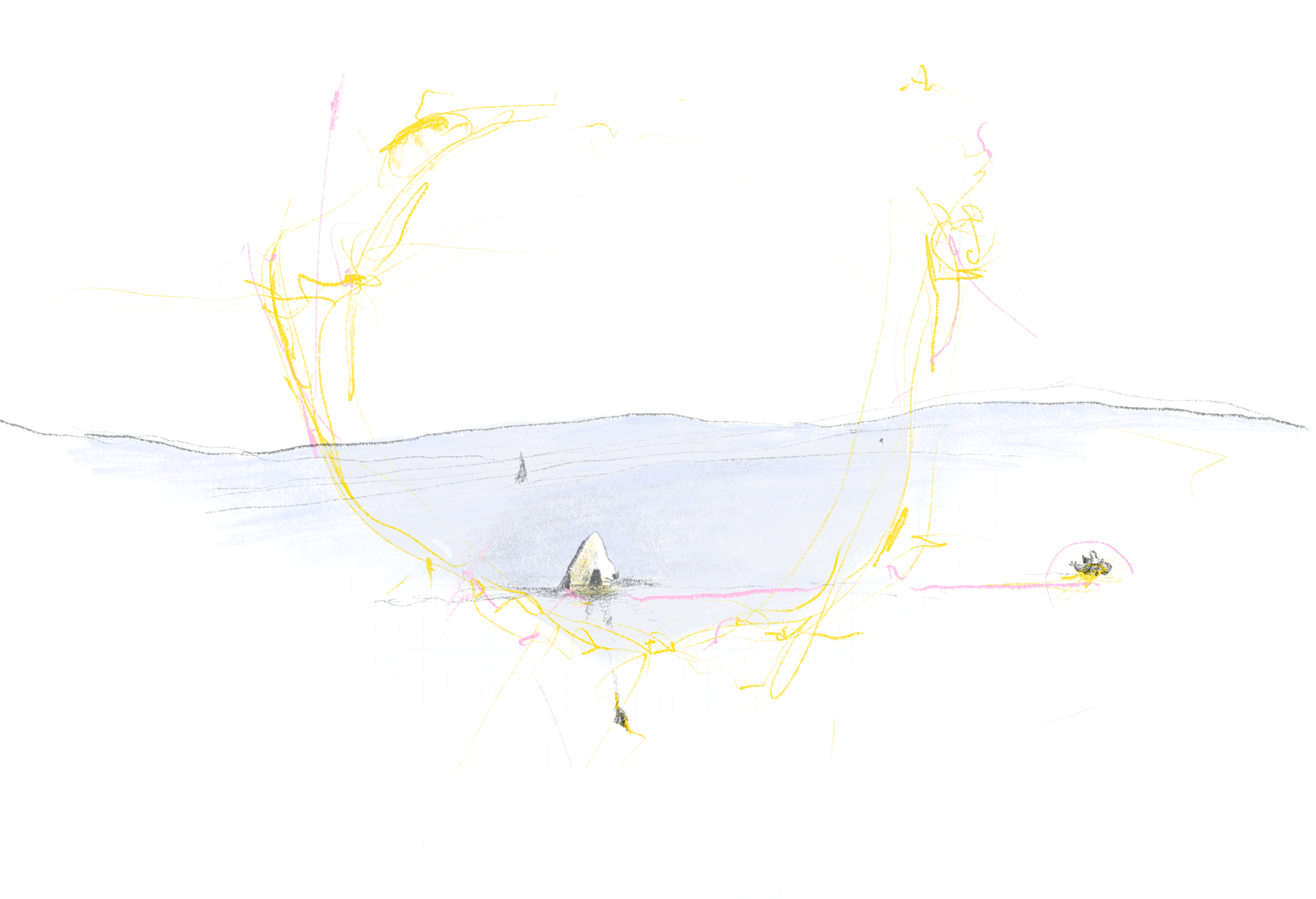
[[last-bikepacking-tour]] The messenger closed the door and set off on her last bikepacking tour before dawn, heading southeast from Bratislava, along the left bank of the Danube River, through five centimetres of snow that had fallen during the night, almost two centuries before I have hands to write with.
The sky brightened a bit beyond Kopáč, and a few minutes later the strong northwestern wind pushed into her back like an endorsement.
Near Šamorín, the messenger widened the tires to 4.2 inches, providing a larger contact patch with the ground, spreading the weight and helping the bicycle float on top of snow rather than sinking in.
She engaged the bicycle’s battery and started to speed up, moving up to fifty after Kyselica, hands hidden in pogies, deep warm shells against the cold.
When the clouds parted and the sun poked through, she tried out her voice by talking with her drone companion Averkije Skila — about the behavior of the bicycle and optimal distribution of load and commenting on riding position, on breathing, weather vs clothing, and its layering.
The messenger loved this ritual, the transition into the attention of a wanderer, calibrating her body and the structure she rode.
The drone suggested lowering the tire pressure down to 4 psi, improving traction and stability, everything else just fine.
Every metre felt like her first touring days.
The body moving through the landscape, the body dragging them all forward, her and the bicycle and the mass distributed along its frame — spare parts, tools, camping gear and food enough to battle dark models of transcontinental expeditions — heavy rains in the mountains, multi day temperatures below zero, crashes and broken structures.
She had always dreamed of such a challenge, but this trip was different. Today the messenger packed for the certainty that she would not return. That it was impossible to return.
So it was mostly food she carried, more than her weight, dried and packed as best she could.
[[komarno]] Just before ten o'clock, the messenger reached Komárno and finished what she considered the fastest part of the journey.
She picked me up from Donnager, a tiny semisubmarine that brought me from Belgrade with a few other personality constructs.
She hurried to catch the ship, because it was allowed to stay in the harbour for seventy minutes only — then returning back to The Black Sea, cutting the stream at three hundred.
There were other constructs already waiting. They’d arrived/were brought some days earlier, in tiny vehicles carrying them along the river from the southeast, mostly.
Actually, there were more constructs than the messenger and her bicycle could carry and she had to decline a few.
The food was more important.
Despite reduction, the rest of the constructs had to slow down all processes to zero, thus shrinking the substrate mass running their consciousness into the smallest volume possible.
Me, I did not need to. I came already packed, small and hard as stone. It has been a while since I’d been up and running in warm jelly speeds.
At noon, February 24, 2084, the messenger continued north into what used to be Slovakia, along the river Váh and then Nitra, passing three checkpoints before arriving into Great Moravia proper.
It was just as well that the constructs were all dormant, non-active and packed like food. The sentinels made it clear this was a permitted, but barely tolerated visit.
The river route lead straight into the capital city of Nitra, where she checked herself with the Tribeč Border Guards.
The messenger presented admission papers and in return, received both a jar of rembirin and dupačky, the outfit for entering the mountains.
Last, during a consultation with a senior Guards officer — an old, tired man, yet still younger than her — she was presented a construct as part of The Terms and Conditions For Admission and Visit,
- proposing and urging The Admitted Visitor and Tour Manager (hereinafter “the visitor”)
- to accept and accomodate
- an expert personality construct Ziller
- to be uploaded into/accomodated within the visitor’s cargo bike
- to be connected to its sensors,
- in a technical consultant role.
A cop, the messenger thought at first, but felt good about it somehow and agreed to all, did not mind and installed the construct’s heart/core on the bicycle, giving him eyes and ears, curious what his voice was like.
It was already dark when she checked out of the The Guards building, left the city and entered the foothills of Tribeč mountains.
She did not venture further that day, but camped when the lights of Nitra were still visible below.
Quick and quiet dinner of lyophilized nettle curry with coconut milk, pumpkin, sugar peas, cucumber, carrots, broccoli and green beans. The good stuff.
In the morning the messenger melted some snow and warmed it in the camping shower.
She saw and touched her body for the last time in her life, cleaning herself with a tiny lump of dark blue soap.
She lotioned herself with rembirin, multiple times in succession, until her skin began to take on a beige, seemingly intact surface and then put on dupačky, stretchy soft overalls, hugging her body like a baby, even her head covered.
The messenger continued northeast, climbing up to Tribeč mountain itself and explored the ridge from there — Malý Tribeč, Medvedí vrch, Mišov vrch, Javorový vrch, Rakytka.
Throughout the day she drank from a bottle full of yoghurt like material and kept leaving a sip in her mouth for minutes at a time, until it soaked into her skull.
She started to burp softly, her ears popped once and hearing wastly improved.
In the afternoon the messenger left the bike a few times and ventured on foot, looking for clues in relief or just staring intently at a few square centimetres of the ground.
When it was getting dark she arrived at a small dimple in relief.
The messenger lost her voice/ability to talk by then, built a tent close to this terrain bowl and lit a fire, feeding it with oak branches late into the night.
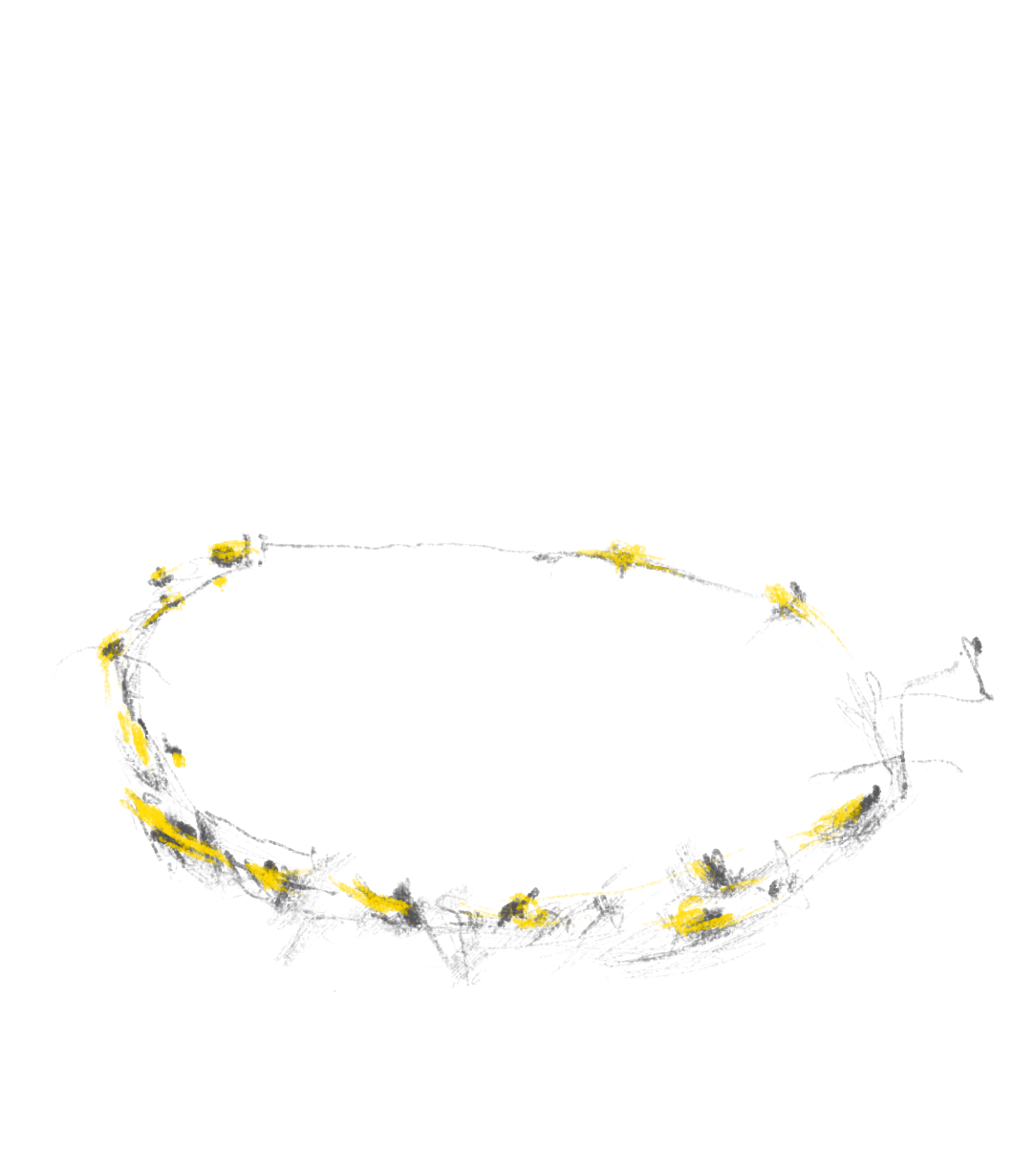
There was no breakfast, only last drops from the bottle and thinking, before entering the sea a river trembles in fear.
But there is no other way. The river cannot go back.
She checked with the drone and determined the most useful approach point to enter the perimeter, got on the bike and started cycling towards the circular depression, some twenty metres ahead.
She made the first ten before noticing the trees to rise, get bigger and further from each other.
And then, the longer she rode, the more the estimated time of arrival increased.
So riding was all she could do now, ride and hope that a sufficient quantity of the active interface particles entered/noticed her body while the lotion and the yoghurt were strongest in her flesh.
Many more hours passed until she started to feel a negligible decrease.
Moving became easier, the breaks could be taken further apart.
Snow vanished and the surface turned into short, bright grass and there were leaves on sparse trees she passed.
Every forty or seventy kilometres the messenger inflated and expanded a tent around her and let the silence lull her to short sleep.
The hours became days, although there was no way of telling precisely, since the day above in the base reality was getting slower and the daylight has changed its color as much as few hours.
Also hunger and all pain in the joints and muscles subsided — only the urgency to move remained, to traverse as much terrain/distance as possible.
Then all the electronics the bike was equipped died, together with the companion drone’s chassis and Averkije Skila had to board the bicycle and share its tiny substrate infrastructure with Ziller’s construct, the only technology working.
The whole expedition was irrefutably inside the active interface.
Very soon the microscopic particles of several substrate styles caught on the bike while manipulating with/packing the constructs back in Komárom started to bloom into diamond or flower shapes, making the bike heavier, more difficult to operate.
The brakes started giving in and the bike became not enough, however cargo and heavy duty it was built.
She could not proceed alone.
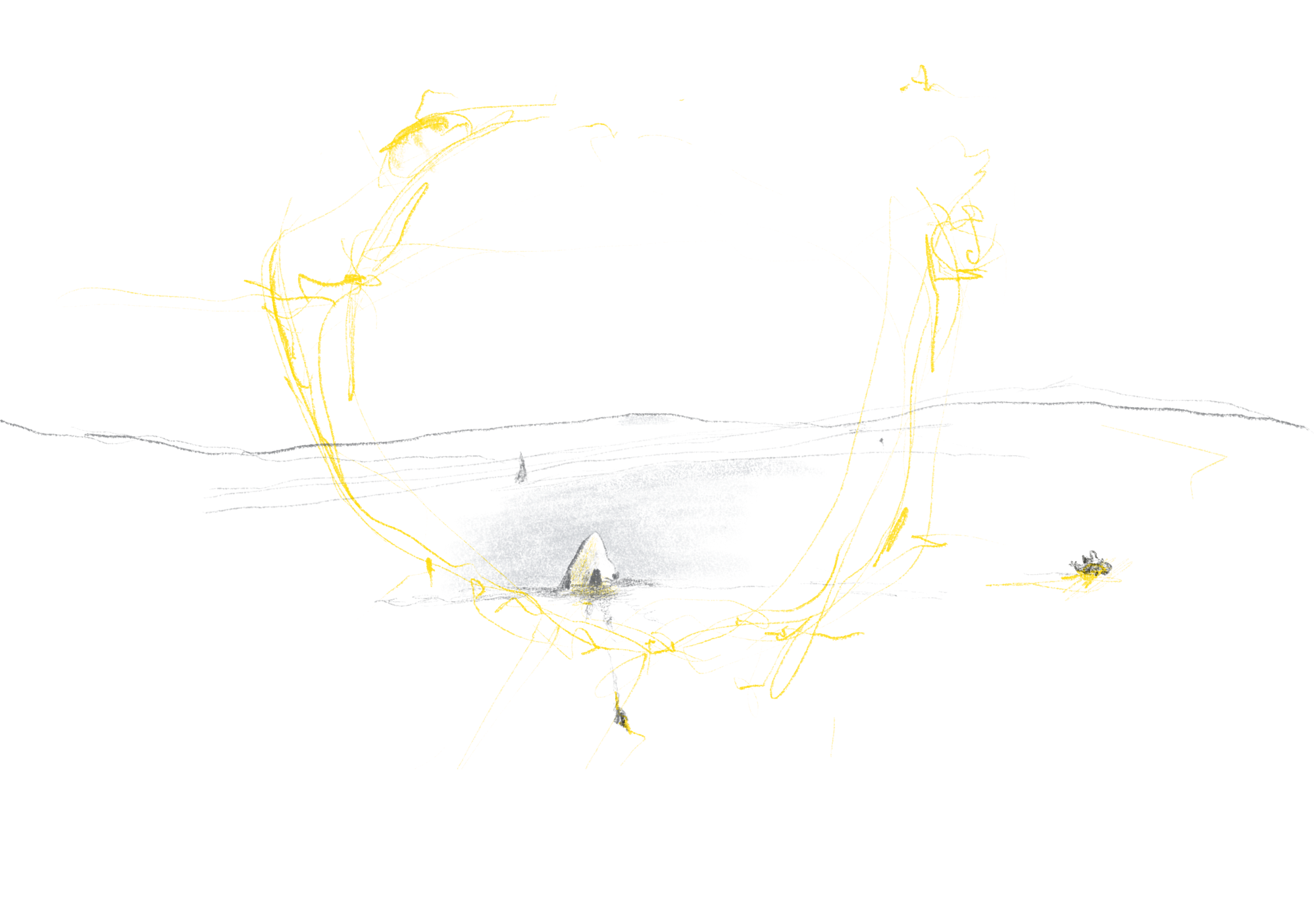
[[ainei-aniemi]] Ainei Aniemi (*2024 - †2079) was the first construct the messenger contacted and unpacked from the cargo space. She used to be a vehicular architect/designer.
She assembled herself a body and helped the messenger build a four-wheel cart. Simple at first, for two bodies, cargo and the first renderable items that had to be packed/carried.
Ziller and Averkije had more space, but evidently learned and worked together to help with building simple machinery and sensors, rendering parts out of any available matter basically, any lump of soil.
They gained speed and the messenger quietly enjoyed the ride, because not able to talk yet, her body in the process of restructuring/transmuting into substrate of the active interface, too.
Not much later, however, Ainei suggested they need a better driver to go even faster, so the messenger contacted/woke up a former pilot Syandre Lotvi (*2052 - †2081). He became the third member of the crew and took over the wheel, because handle bars were not useful anymore.
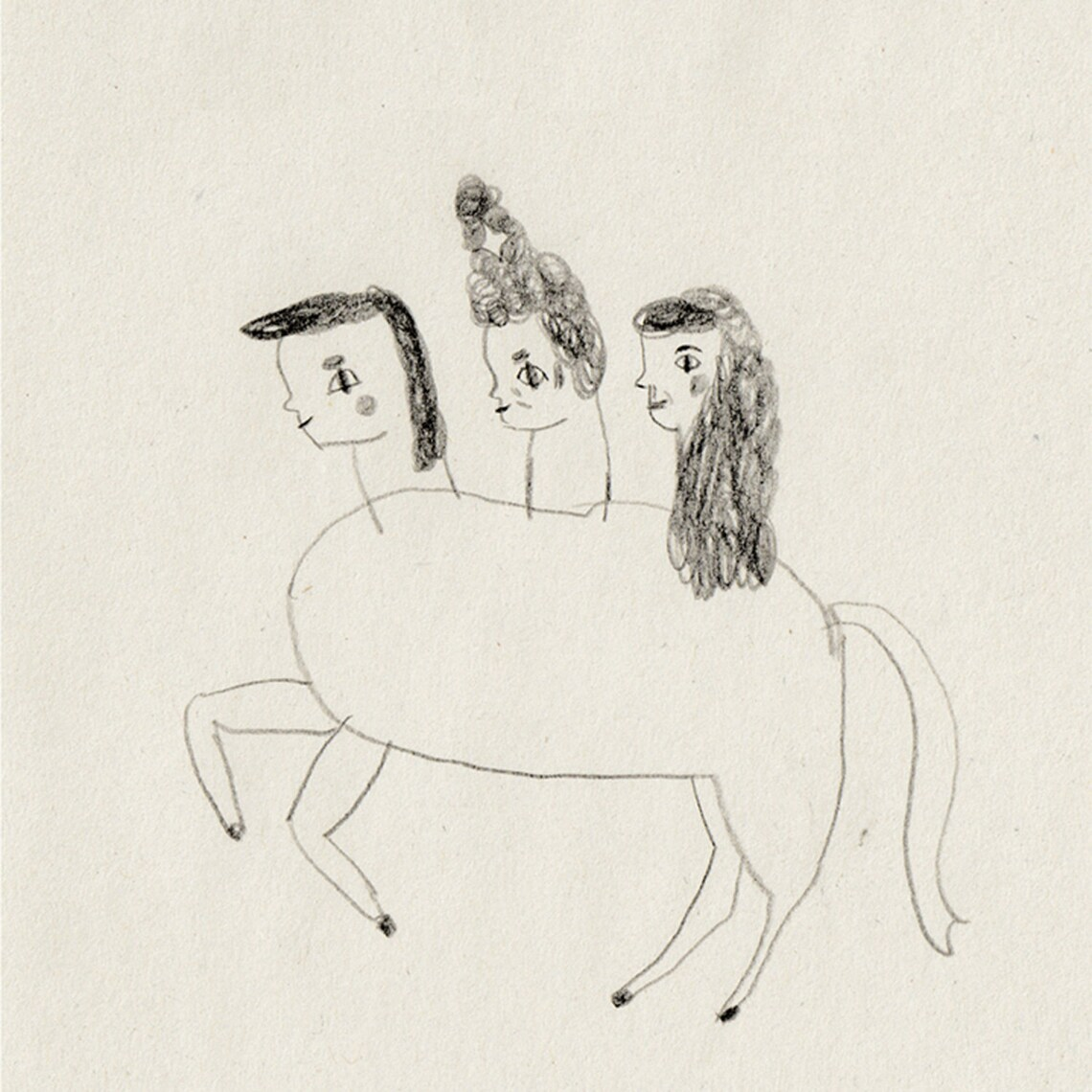
Ainei Aniemi with Syandre iterated the vehicle every twenty hours, tweaking the frame, brakes, wheels, the cabin or the cargo space.
The speed they were able to reach now! One hundred became three hundred klicks per day, but that was the safe limit — even with heavily versioned downhil vehicle the terrain was too difficult.
The vehicle needed a better surface, but there were no roads — so after a mutual discussion, approved by the messenger, the crew invited the fourth person into the interface reality — a construct of a trail builder called Popol (*2029 - †2073).
His chosen assembled body shape still resembled a human, as agreed in the team contract, but adjusted for sculpting and heavy lifting.
He asked the small crew to stop, to break the descent.
So they built a camp, where Popol started assembling a storm cloud and huge dog/deer/bear creatures. They roamed and practised around the camp, a few dozens in the end — Ainei, Syandre with the messenger helping Popol to keep them organized.
After all were properly set, the creatures rushed away through untouched forests below, dragging the storm cloud behind, its torrential rain washing away trees and rocks, with thick layers of soil and leaves, and further clearing the corridor trampled by those quadrupedal creatures.
When the camp quiteted, the crew redesigned the downhill vehicle, so it could rush without undue braking down the gigantic slope.
Imagine them, in a cramped, but extremely cozy cabin of a vehicle continuosly reconstructed.
Syandre at the controls, the messenger next to the pilot and Ainei Aniemi behind, with all the other constructs, databanks and cargo. In the back, Popol with his huge trunk and hands, navigating the stomping creatures, via sensors Averkije Skila and Ziller operated.
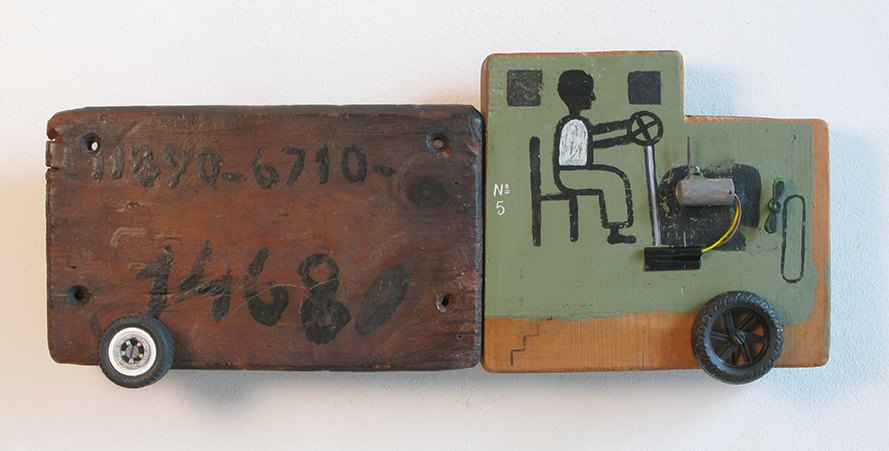
After seventen thousand kilometres, the forest biome turned into even, grassy terrain and the track faded, ended.
No sign of the dog/deer/bear creatures either, only the parked storm cloud.
The light outside in base reality of Tribeč mountains, eternally high above, turned to late afternoon glow by then.
Down on, the terrain consisted of ever so wider wave of ridges and valleys. The vehicle utilized their walls for braking, jumping or generally navigating and changing lanes when useful or neccessary.
These were beautiful and scary times, the messenger told me later.
It should have taken approximately ninety to ninety five days to reach the lowest point of the terrain bowl in the mountains of Tribeč. Assuming you're moving for twenty hours per day, at a speed of four hundred kilometers per hour.
But after one hundred and twenty days (2 900 hours), the expedition arrived nowhere near the bottom and it became clear that the ride down the slope is not going to take seven hundred thousand kilometres. Not even nine hundred.
Ziller and Averkije Skila both announced that more like thirty million, based on their current/possible measurements. Maybe even fifty million kilometres more.
Another ten or fifteen years of traveling, if the crew kept jumping and riding down around the same subsonic speed, with breaks once a day or week.
The messenger’s food supplies didn’t worry her, even though calculated for two hundred days only — she could already eat and digest the active interface mass.
It was whether to stop eating them for good and lose the last remnants of human or any biology — which implied Ziller could assert a legal claim to participate in how to proceed.
The messenger knew they needed some ideas what to do and Ziller’s made sense, she just did not trust him nor his offers to help.
In the end it was Popol and Averkije, who persuaded her to give Ziller a chance at the wheel. To come up with a plan. Both.
Thus Ziller the construct from Great Moravia left the vehicle infrastructure and its sensors and moved into a body, finally a person, the only one with all the details of real skin and his chest rising and falling as if breathing.
He rendered a guy around fifty, bald and tall, in loose dark pants and shirt.
He proposed to wake all the constructs still dormant and assemble them into various teams for a design sprint, a timeboxed and taskboxed process to define a problem, design and test a prototype — with her visiting each group and deciding at important points.
The sprint took forty two hours and brought following findings and learnings:
- The crew needed some kind of drive, faster than the pull of gravity could provide,
- they might be able to build jet/propulsion engine, but were not able to create fuel in sufficient quantities,
- the local physical laws enabled sound to travel almost four times faster than in the base reality,
- so the most promising idea of the design sprint turned out to be utilizing sound frequencies,
- since there was methodology and process and precedence by the players the Glass Bead Game,
- to activate and move and even restructure the interface bedrock with audio,
- to force the interface bedrock to react and produce low end frequency bursts the vehicle could absorb as a sail catches the wind.
The success metrics:
- Reaching up to five thousand kilometres per hour,
- traveling forty thousand kilometers per day,
- sustainably for thirty or even fifty million kilometres, if needed.
I did not take part in the design sprint — was woken up and offered a form only after the decision and project kick off.
So when the downhill vehicle was about to become a mountain I poured into a body.
As if something in some distance could suddenly be discerned, my thoughts appeared. At first only a sensation, of going from one place to another.
When I could open my eyes the room seemed as big as a hall, but it was me who was tiny.
Mostly I just slept, feeling the gravity through my small skeleton and what felt/worked like muscles, gaining mass.
Inbetween slumber I recalled there was no other immediate expectation or a task to perform, only to get used to my body and the self image within.
To keep that self-image stable.
I was left alone for the first few days.
Until the messenger started sending me shapes and written notes — testing my coherence perhaps — and she must have been satisified, because asked if she may visit my coupé, the small space where I left the core case with substrate mass running me and poured into a body, a small one at first, like a child.
I agreed and that’s when I saw her for the first time, crawling into my safe space.
She said, welcome on board, Mira Melko. I’m Diziet Sma. Would you like to go for a walk?
I nodded, gave her my hand and she took me up on the roof.
I remember I perceived no sharp distinction between foreground and background in those first moments outside, the mega landscape was not a backdrop, and everything that happened was a part of the scenery.
If you’d paid attention as I did, it still seemed like a small dimple in relief we were descending and I asked to play there on the top of the vehicle for a while, reluctant to talk and Dizi did not push me either.
Then I asked her to bring me back into my space and let me sleep, but promise to take me for a walk the next day, too.
Every time I woke up we walked a bit further to the back of the vehicle and watch Ainei Aniemi and her constructors there, extracting slabs of landscape/interface and turn it into frame components, remodelling the vehicle into a many times larger entity.
They collaborated with a multicouple of vocateurs calling themselves The Hysteron Proteron Crew.
They were installing sonic projectors, acoustic radiators and covering huge openings with surfaces that moved back and forth in response to signals from the crew members, creating air pressure changes that produced sound waves and tones.
I grew fond of the sound system builders, and insisted that I wanted, no, I needed to stay outside, to listen to the vehicle making sound and wait for the answer of landscape when it arrives and Dizi agreed, seemed almost happy and took me all the way up the hull, covered by soft, long hair carpet material here.
Together with a few of ancillaries, she helped me to create a cosy nook with a view, like a nest embedded in the ground.
I remember when I was left alone out there, some sounds lulling me to sleep and others trigerring tingles and sweet shivers, the flight-or-fight reflex and what being in the womb might be like at the same time.
The bass, so instantly and obviously physical.
I remember waiting for the phase culmination, when the lowest frequencies washed over the landscape, then falling asleep.
The next time I woke up I asked Dizi if I could have a pen and paper.
So I started to write, but not to get things down or out in some mark of finality but to think through ideas first.
The pen helped me, compelled lucidity, as it has always done.
As it helped you, dear Mira.
The catalog of emotion that disappears when someone dies, and the degree to which we rely on a few people to record something of what life was to them, that was almost too much to bear for you.
You were preoccupied with absence, the value of things left behind. You dedicated so much energy to creating a record of you and what life was to you.
Contributing one more layer, like soot, to all the things already sedimented in a collective understanding of the world.
Is that who I am?
An accessory, a frame of reference, an external memory?
Maybe at first, but you have always liked stories within stories, doublings and self referencing.
I feel I need to take this story as seriously as I can.
I spend most of the time in my priehlbinka, hidden in the soft surface and I listen to the beats and waves trying to wake the landscape and I write.
It is very difficult for me to weave a linear, readable text. For hours I struggle to describe a single idea or scene I see the first seven minutes after I wake up, until utter exhaustion.
But that is the only way I can concentrate and write something down. Even though I know it shortens my lifespan. My service life.
I write and raise my head once in a while, to watch the bottom area, still millions of kilometers further down and it feels like the best time of your life again.
Chapter 2: Castalia
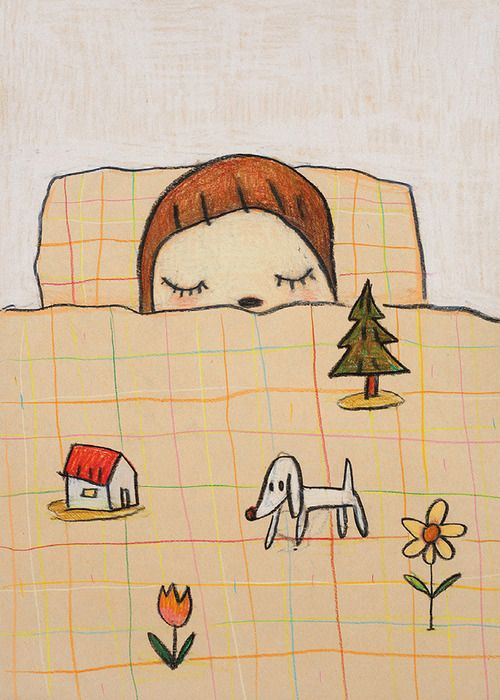
[[20091218]] The best time of your life started on December 18, 2009, when you let the lights off and locked the door from the inside.
You sat down, leaning against the wall and your backpack and your eyes closed so suddenly you didn't have time to think: “I’m falling asleep.”
You were amazed to find yourself in the dark, mild and soothing to the eyes, a few hours later, in a time of freedom, when one does not cook, shop or clean, when one is still. Only the poorest in the factories made things while the first world rested.
You didn't move for a long time, a body in the corner of a room that you’d never slept in, in a land you’d never visited.
You meant nothing at last, you had no accountability except to yourself and the sentences you would write from now on and manage to connect day by day with each other.
You’d never been afraid to disappear and look for what comes to you in the silence, but suddenly you had time on the scale of months — not hours, separated by weeks of disjointed and fragmented junktime.
You knew you always traced every good thing in your life back to misfortune or failure. You just couldn’t determine what is good and what is bad when something was happening and it was that uncertainty that was keeping you alive.
[[despite-everything]]Because despite everything, you were still following your sense of wonder — dedication to the geometry of thought, the ecology of attention. The cult of learning.
Somehow you managed to stand up, even shower, brush your teeth and find a bed to leave the world again.
You slept through the whole day and woke up when it started to get dark.
The temperature dropped, the rain turned into snow. You put on warm socks, ate a crumpled cake from Copenhagen that survived the whole trip and returned to bed that smelled like nothing, or like Cusarian soap, an empty smell with just the suggestion of mineral water.
You felt certain that you would never again experience a similar feeling of new beginning.
You woke up again on the second morning, to a rhythmic, determined, but muffled sound. You listened to those judicious intervals, and delaying the moment you stood up and looked out the window.
A guy in a mountain rescuer jacket, with a wide shovel, trying to dig a passage in fresh, knee deep snow.
Warmed by air rising from the radiator, you watched the guy and huge flakes for a while. The problem is not that we are alone, you thought, but rather that we are not left alone enough.
Then you entered the third room finally: a small study with a balcony. A desk, sofa and a matching armchair with futon. Soft carpet, smell of wood and flannel.
You noticed a bowl in the corner of the desk, with small clouds above it.
It was not big, you could cover it with your hands, but you didn’t dare to go near the bowl, let alone touch it. It was full of the substrate with active interface, in the shape of a small hill.
You left the room, made a coffee and only then, with a cup in your hand, returned to the writing room, approached the bowl and observed the movement of a cloud obscuring a hillside meadow landscape, partitioned by a few screens of old, dark trees, swaying in miniature wind.
A dynamic spatial model, an environment with granularity of simulated shapes, surfaces and details up to the subatomic level. Here, a piece of interior architecture.
This had to be the moment you felt home.
Also at this very moment, brains from all over the world — coders, game developers and mathematicians, experts in semantics, as well as machine learning or quantum mechanics — were arriving to Cusaria, attending job interviews, lectures and learning the rules of The Glass Bead Game. But in fact and in the end coming to clean up and reconstruct the country after the war.
And to to reconstruct the Dictionary of Cusarians — Lexicon Cosri, as it had been known — to build it all over again, but this time also digitally, not only textually and spatially.
How can we make knowledge tools that let humans work with ideas that are too big to fit in one person's head? In a thousand people's heads? Once information gets large enough, even just knowing what is known, what to search for, what to connect, becomes daunting. How do we scale that?
But you were not ready to take part yet. Fascinated and enthusiastic you imagined all of them, but you could not think of any smalltalk, networking and work then. You were not sure you can help at all.
On the third day, well slept finally, you woke up to the shortest day of the year.
You unloaded your backpack at last, put the sleeping bag roll and mattress into the cupboard, laid out your cosmetics in the bathroom, sorted the clothes and realized it was Monday and there was no daily standup, your team waiting for you, nor any meetings. Delicious and frightening at the same time.
The habit to activate and move, however withered you felt, made you go for a walk outside: at least a few metres up the road, towards the mountains, but you continued about a kilometre up — on white, packed snow — until you arrived at/found Sanatorium Dnjepr.
It was early for dinner, so you were almost alone in the large dining room. You picked a table by the window and ordered a big bowl of borscht. I remember an old lady approached you after you ate it. She was called Nina and worked here as a manager, but also a librarian.
She asked whether you arrived here for the The Dictionary building program, as she called it and you agreed and you thought how wonderful the opportunity was, to be offered housing with no questions asked for months, how cool is that, how crucial, this kind of recruiting strategy.
Nina asked whether you wanted to see their collection and of course you did and she showed you a room full of log books with local dreams that survived the war.
She reccomended a few interesting volumes and you borrowed one.
They also had a huge installation of active interface here, across whole lobby, some of the dream clusters were spread out into a patern of small statues and zones.
A chef passed by as you gazed upon the shapes and stopped to remark that in its raw, unformatted state, the mass/material of substrate reminds muscle, jelly, and sand together, but technically it is cookie dough — the substrate could be eaten.
He was called Andrej and brought you a pack of pancakes, they warmed your hand in the jacket pocket on the way back.
Next day a beautiful routine started: waking up at seven, exercise, making a filter coffee and drink it on a small glassed balcony.
Then sitting behind the desk and writing, in eerie calm, detached from the urgencies of the everyday, accessing the forces which govern mundane reality but which are ordinarily obscured.
Writing hard and clear about what hurt. To find out what you were thinking, what you were looking at, what you saw, and what it meant. What you wanted and what you feared.
You wrote about yourself so you could stop thinking about what had happened and be done with it.
You had a hunch that focus this deep is a trauma response. You did not care and accepted it might take you a few more years to tidy up your thoughts, to heal.
Actually, those must be my happiest days, too — all those texts and editing work became key data sets and the basic taxonomy of my soul/structure and heart/core.
You never cooked big meals, only breakfast and coffee and went for a late lunch to the sanatorium, reading at and after lunch, next to the big active interface in one of the dark green chairs.
Mostly alone, you got to know few people besides Nina and Andrej the chef.
Then returned to the flat on the third floor of a small apartment building. Learning how to sleep again.
Nine or even ten hours of sleep and snow outside.
Time and again you returned to these days, mentioning them in your journals and notes and tagged them repeatedly with the sweetest of sentiments.
Chapter 3: The polemic
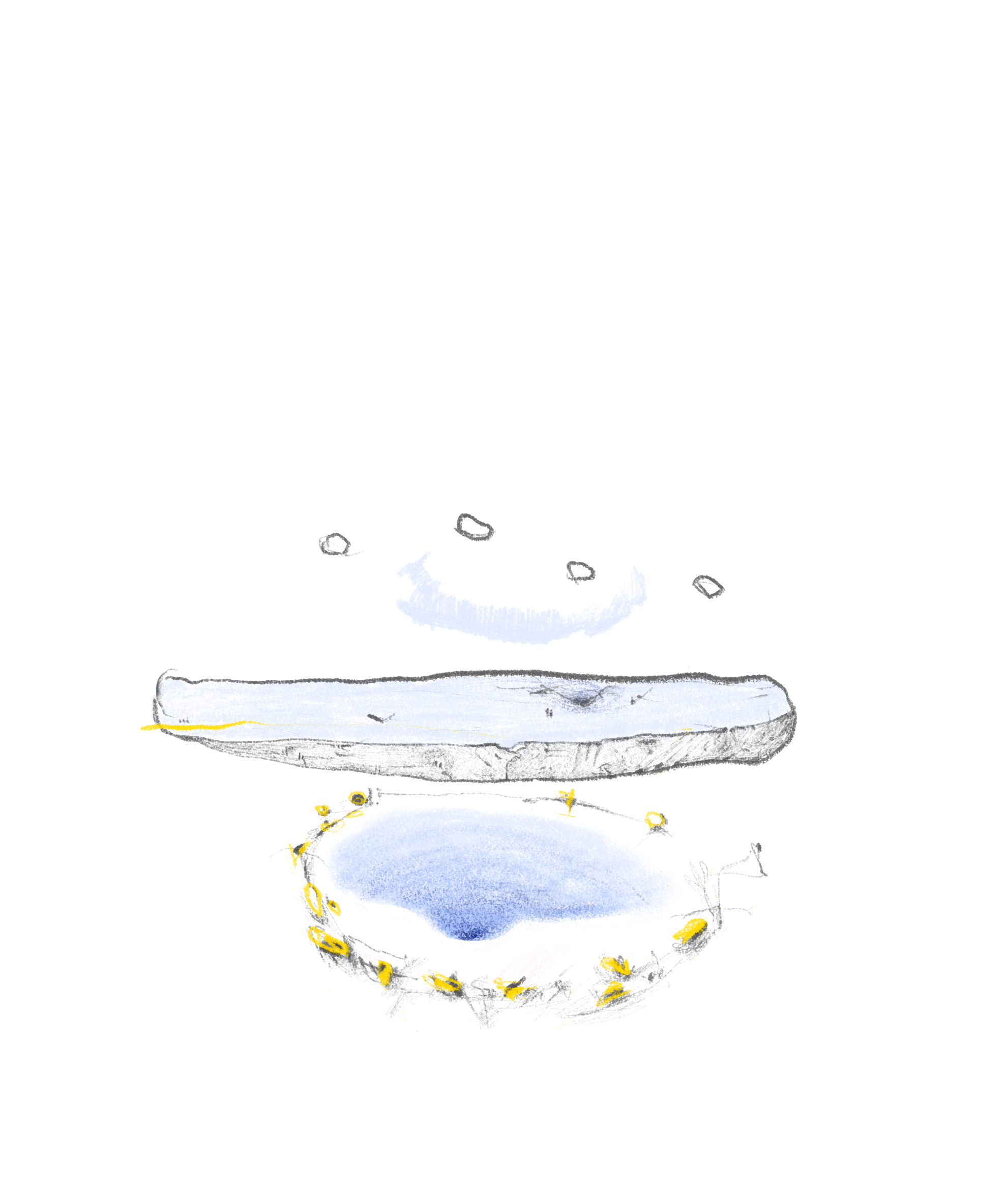
You left the flat at the end of January, after forty days of solitude.
The last coffee, watching tiny clouds above the miniature installation of substrate with active interface, as they scattered with morning sun.
On your way you said goodbye to Nina, returned the borrowed dream log books and Andrej gave you a pack of string cheese and flatbread stuffed with herbs, and decided to walk you to the cable car station and did not want you to leave right away, but to drink some mulled wine with him.
And you did and he talked about being a Russian and an overwhelming sense of shame for the world he used to live in, sadness at the ignorance of people who don't know history, and a bit of dismay at how powerless human reason is and how weak are the primitive principles of humanity that he once assumed were innate in human beings.
You managed to take the pre-last cable car of the day, up to the ridge, where you planned to spend a couple of days, at a mountain hotel/observatory — waiting for a group of Austrian climbers, expected to arrive from the Northeast in the next two-three days, with plans to continue to Castalia, until 1992 known as The Castalian Autonomous Oblast of the Cusarian Soviet Socialist Republic.
There should be a cottage waiting for you, booked from the Ministry of Dictionary Construction till the end of March.
You expected cosy and quiet mountain lodge, but to your surprise there were some eleven other people from around the world — all heading to Castalia, all waiting for the Austrians to take them over the pass — since it was mandatory to travel with a certified mountaineer in that time of the year.
And you thought you were the only adventurous and romantic one around!
You kept to yourself as much as you could though and the others respected it — but inside, you felt restless — certain you were strong and experienced enough to make the trip on your own. You welcomed this impatience, it meant you were out of the worst.
Also, it was calming in a way, listening to all the chatter and laughing and planning.
A few more people arrived and you grew to a party of twenty two people to head out to Castalia.
On the way up to the pass you entered low clouds. But the path was clear, well trodden by other walkers. You could have made it on your own. Some six hours of marching, with a few short breaks, until you reached the pass.
Located just below the pass on the other side a shelter waited for you, a defunct radar/military base/outpost.
There were two house keepers and rescuers if needed, Castalians, who showed you all spaces aproppriate for sleeping, with few beds available left to those who really needed them.
Almost all of the travellers gathered for meals, drinks and smokes and talking in large space/hall with huge windows in steel frames.
The clouds cleared up, but darknes fell fast anyway and someone noticed tiny lights down in the distance.
A voice said Waldzell, and it was the Frenchman sitting beside you on a wooden bench. You felt his deep voice vibrating from the backrest into you, as he continued speaking.
About the roofs and towers of Waldzell, the city in the high plains of the South Caucasus, founded by Princess Ateh.
But first about her brother or lover, no one knows, the ruler of Cusarian empire, the lands between the Black and Caspian Seas, on both sides of the Caucasus mountains.
The Cusarian Khagan, as the ruler was addressed, had a dream in 859 AD. An angel appeared to him and said: “Your intentions are pleasing to God, but your deeds are not.”
The kagan summoned three philosophers from different parts of the world to interpret the dream for him.
An Islamic, a Hebrew, and a Christian missionary.
This was of immense importance to the Cusarian Empire because the kagan decided that he and his people would convert to the faith of whichever sage interpreted the dream most satisfactorily.
Princess Ateh was taken aback by the plan. For the kagan knew well her position regarding religions.
Their utility, she declared, is ultimately practical — to unite, to bring together, to cement people in formations hitherto unheard of, to put the interests of the group before their own benefit.
Rulers could build a country as a result, yes, but that was not enough for Princess Ateh. She considered the deepening of meaning to be the most powerful conceivable kind of adventure available to us in this world, more exciting than any bridge or system of trade routes.
In this direction lies a better way of governing a country than through religion — bridges and routes and merchants will follow, Princess Ateh insisted.
The kagan listened to her intently, for Princess Ateh was also the High Priestess of ancient sect of scholars, philosophers, poets, and even state officials, who called themselves dream hunters.
They believed that there were nodal points in everyone's life and that each person should carve out these states of lucid consciousness as if on a stick.
Such moments of peak fulfillment in life were called dreams and therefore they were called dream hunters.
Astronomers have a fitting word, syzygy — an interesting arrangement or alignment of celestial bodies in the sky — but it can be used more generally as the state of things fitting together.
Their devotion was to memory, for them it was everything and considered the knowledge gained through experience the greatest asset you could ever have.
They even used ideas and memory objects as game pieces in a game to determine certain roles within communities governed by dream hunters.
It was called The Glass Bead Game, because the game pieces resembled glass beads.
The Game aimed to represent reality to such a degree that a player's own skills and philosophical outlook could be expressed in play — the idea being that rival ideologies and different knowhows were essentially tested in the game before the winners could apply them in reality.
Princess Ateh argued to the kagan that the Glass Bead Game could be adapted and used as a tool for the governance and ruling of the Cusarian Empire.
Cancel the invitations, cancel the debate and adopt the Game, demanded Ateh. Like no other king you would grasp administration, education, supplies and troops. Consider the plans and decisions you will be able to make!
The kagan had no intention to cancel the invitations and stated that he will make his decision after the debate, no matter what.
Firstly, he craved company, he really wanted to talk about his dream with bright visitors and looked forward to hosting the debate in his summer residence.
He enjoyed the preparations and dramaturgy, the setting of debate chambers and appropriate menus and optimal schedules and day rhythms.
But more importantly, the kagan provided Ateh with much needed focus and a deadline — more than a year to work and think, to refine The Glass Bead Game for usage in large scale governance and operations.
More than a year until the philophers were expected to arrive.
In the late spring of 862 an Islamic dervish Ibn Kura, a Hebrew rabbi Isak Sangari, and a Christian monk Constantine arrived safely at the kagan's summer residence on the eastern shores of the Black Sea.
The positions of the three sages, the verbal duels based on the principles of the three different faiths, the persons of the philosophers involved, and the polemic itself have aroused great curiosity, and over the centuries innumerable and deeply contradictory treatises have been devoted to the polemic and its consequences, to the victors and the vanquished, in the Hebrew, the Christian, and the Islamic worlds alike.
Each religion claimed victory, but in fact, the kagan did not accept any of the religions exclusively — more like distributing variants upon different areas of society: Muslim for the army, Christian for the farmers and Jewish for the merchants.
His explanation was that all the three faiths that the sages held — Islam, Christianity and Judaism — presented three layers of God's book, and each nation (country, group of people) adopts these layers from God's book according to the order that best suits it, thus confessing its deepest nature.
At the same time, the kagan started demanding certain principles, procedures and tools to be used by his subjects. Almost invisible at first sight, but gradually all pervading.
The emphasis on knowledge management and learning techniques of the dream hunters — or The Princess Ateh Praxis, as they were later referred to.
Princess Ateh moved to a secluded high plain called Castalia and proclaimed it a pedagogical province, where she established a monastery/university to provide teachers to the host state of Cusaria.
This place was named Waldzell and kagan provided it budget and security like to the most precious fortress town.
Students were selected from the most promising pupils, both girls and boys and they lived and studied in Waldzell to become teachers, spreading around the country.
Teaching kids how to learn, from five onwards, and gathering knowhow from adults and old folks.
And they taught them all, no matter the age, how to build a personal, lifelong archive — an external memory or a second brain, if you will.
How to collect, organize, disstil the most important/interesting information you encounter, learn, experience.
Actually how each Cusarian citizen was to record their life and dreams, and how the libraries were to store and process them.
So they could play the Glass Bead Game and the best officers, soldiers, craftsmen and artists could be found — the most impactful thing the kagan adopted from Princess Ateh and dream hunters.
Because Princess Ateh and her team developed and modified the game so that it could be used to determine offices and political status within the whole empire.
In a few iterations the Game became so complex, so subtle, so flexible and so demanding that it was as precise and comprehensive a model of life as it is possible to construct. Whoever succeeded at the game succeeded in life — the same qualities were required in each to ensure dominance.
The court, the army or other imperial officials played for their positions in four year cycles.
Initially consisting of a few thousand players and through the various rounds, these all whittled down until the final game, the victor of which became Magister Ludi. Master of the Game.
Someone we would call a prime minister or the executive officer answering only to the kagan.
Players knocked out from the main series took part in further games to determine their careers.
It became an institution so important, it structured social reality and for three centuries The Glass Bead Game became Cusarian competitive advantage and the lands between The Black and Caspian Seas prospered, as Princess Ateh promised.
As a by product or supporting infrastructure The Cusarians were building Lexicon Cosri — a national knowledge base, unlike any other on the planet at the time or any after.
The Dictionary many of the listeners came here to rebuild.
After the frenchman finished the story a lot of questions arrived and various details got discussed about the polemic, dream hunters or the Glass Bead Game.
Some architect or sculptor explained how dream hunters turned the most important models, experiences and memories into knowledge artefacts, using a special modelling material.
Substrate.
As scientists can distill a complex theory into a single formula, the best dream hunters used substrate to rewrite a story, compose knowledge into a statue, a glyph containing all content.
The substrate was easy to shape and sculpt, didn't chip, and held its shape. When formatted, it could gain the strength of stone and withstand changes for centuries.
Is it true that all three participants of the polemic received this modeling substance as a gift, to build the knowledge of their religion? Someone else asked from the semi dark of the radar/military base.
Yes, another voice confirmed, and some fragments have survived to this day.
We know the fate of the substrate given as a gift to the representatives of both Islam and Judaism. We have records, and even ruins or remnants of installations.
There is an entire scene three square metres large in Tehran — and a few reliefs and statues in Middles East.
The third piece, the gift of the substrate to the Christian scholar Constantine, is regarded lost.
There is a report from the sixteenth century of a failed installation somewhere in the eastern lands and searches have been carried out in Greece, Bulgaria, around Constantinople, but no trace ever uncovered.
Yeah, right, you thought and drank tea.
Next morning the party descended another few hundred metres and split up.
The larger group with the Austrian climbers/mountaneers continued to Waldzell in a long arc above the line of trees, but you remained in the smaller one and reached another crossroads after noon.
It was your exit into the valley below.
You thanked for the company, waved the four fellow travellers goodbye and once again became alone with your backpack.
The further you walked and descended the less snow you saw, until dissapearing completely.
The cottage was about a twenty minute walk above the village of Amtiskav, in the foothills above the plain proper.
Your own house in Castalia, for a while at least. No signal and no internet though. But a huge bed in the corner and many blankets. The first time falling asleep there you felt as a collapsing point at the centre of the universe, sinking on yourself in recursions and sleep hit you like a gravity well.
The second morning you established another schedule:
- wake up at six thirty,
- morning exercise routine,
- water and first coffee,
- start writing around seven forty or eight and last until twelve, with one more coffee inbetween,
- eat something, make tea from ku,
- then head out into the woods.
They were old woods with trees well apart, so you could turn away from the path anywhere and you did, in a huge parka-like coat you borrowed from behind the door.
You also found a pair of tall forestry boots, maybe three sizes too big. Used, but well cared about. Thick vibram soles, the foot rubberized a third of the way up, the inside lined with wooly material.
You still needed to wear two socks and change your gait to fit the boots, but the sweet sense of concealment it provided was priceless. Along with the coat coming down to your knees and with sleeves longer than your arms, you could last half a day outdoors at minus twenty.
It was freezing since you arrived, but not a flake of snow. Frosted leaves and frozen grass.
You walked, three to five hours and sometimes until dark or exhaustion. Whichever came first. You wanted to live again.
And you felt camouflaged enough and far away from the offices in Copenhagen, New York, Buenos Aires or Prague that you dared to ask the hardest questions.
You were starting to emerge from the shock of leaving your job, status and life, able to articulate what actually happened, how you felt.
You could recognize the colors of panic, shame or guilt of not being able or wanting to continue as the Executive Transformation Officer.
That person who was good at something was no longer you. It was just part of you. And you had to let that part go, for the time being. And it felt like starting from scratch. Like you were giving up all the progress you've made?
You roamed wild boar and deer trails, through raspberry bushes and followed the creeks up to their sources, visited all the highest points around and watched the high plains of Castalia a dozen klicks down the main valley, with Waldzell pale in the background.
You touched the bark of trees and thanked for the opportunity to slow down to a different speed.
You wrote a text to Timrava on one of the hills where the weak signal could send it to Europe: I obsessively needed the data from the failure — to learn, to see for myself which way to move and how. Also, what I don't know, what to avoid, what I can't handle anymore.
She answered Everyone good is torn from someone else’s grasp.
And a day later she added: Pretty much everyone you knew that became let’s say successful and/or happy, had to say fuck it and change literally everything at some point in their life. Quitting their job, moving somewhere new, going all in on a weird idea. You have to be a little bit insane to live a good life.
You thought of your former board-level bosses and your team members, and the dozens of hours you devoted to them every week as a leader, in one-on-ones or in meetings, stand-ups, statuses, and your muscles went slack at the image.
But you no longer wished for one thing: to sleep in a locked apartment. You longed to walk quietly, come back, listen to the crackle in the oven, to smell dry heat of burning wood and write.
And you began to perceive the life and job you left as a decade structured only by industrial time — the social construct of workdays, weekends and vacations.
You realized you escaped at the last minute, just short of losing all sanity and confidence in yourself, while doing dangerous things — fighting for dreams, even though failure was almost certain from the start.
Walks and writing ceased to be psychoterapeutic, you noticed that your brain started to change, started to alight upon new topics and rediscover old subjects of interest.
One day at the end of February someone knocked on the door.
A man, American accent, he asked you to show him the best way to a settlement nearby, since he was told that somewhere around here should be a shortcut and was not sure which one of the three tracks was the right one.
A fellow sabbatical programme resident, as he introduced himself and handing you a package — explaining he had offered to bring the parcel from the village post office, containing books you ordered from The Ministry.
You left the parcel behind the door and put on your boots and coat to show him the track he needed.
He came across as a bit older than you, wisened, but gleaming and immediately difficult to hate. The man utilized the time asking superb questions and made you talk so easily, about the real work of life and finding things worth committing to.
You remembered his remark: Then the only job is to design your life to continue to do those things, no?
But did you have no idea who the man was? Didn’t you recognize Sagasta, the American-born son of Cusarian immigrants, the inventor of the most widely used search engine and operating system and CEO of the company winning the tender procedure for developing and partly building the national geolocation and visualisation network, resurrecting the mythical Cusarian Dictionary once again and better this time?
No, he could do genius mimicry, to travel around in disguise, as a fairy tale king and indeed, the man became the prime minister of Cusaria in three years.
Only after you returned, you opened the parcel.
There was an envelope tucked between the books.
It was an invitation to a meeting, requested and signed by The Ministry of the Dictionary Construction and The Magister Ludi, too.
Chapter 4: Waldzell
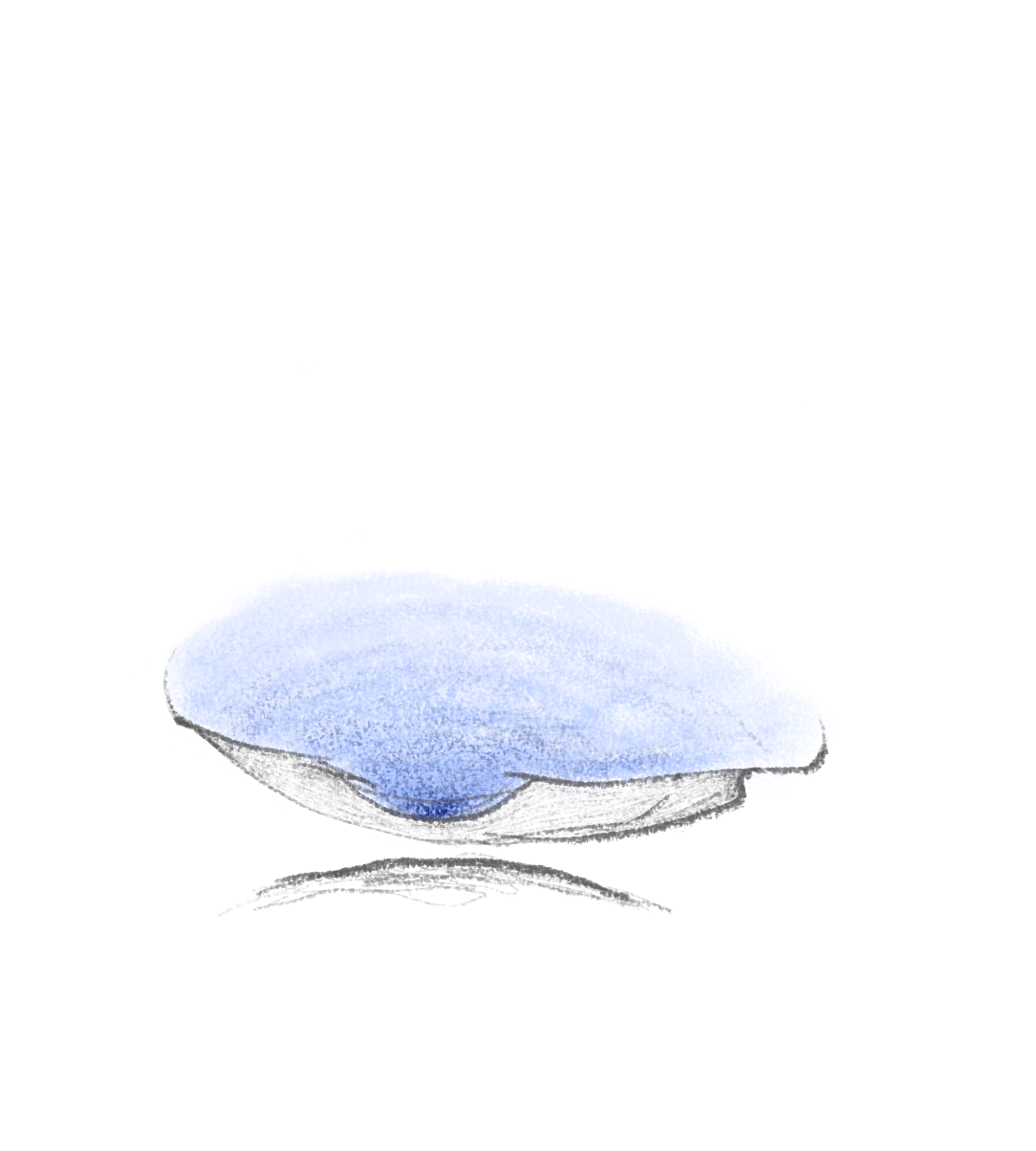
You picked and confirmed the second earliest date offered in the invitation. Six days of waiting, suddenly fast thanks to the set appointment.
You travelled to the heart of the pedagogical province by bicycle with fat tyres borrowed from the guy operating the village general store, one day before the meeting.
You didn’t take the main road, but a path via frozen forest giving way to long meadows, slowly descending into a circular plain.
Back in the late winter of 2010 you had another five hours of daylight and less than thirty kilometres to get to Castalia’s capital, so you were in no rush.
Besides, you intended to make this ride a ritual, a memorial service.
The closer you got to the city the more exograms and glyphs you encountered and you stopped to touch them and tried to read them.
Hard as stone, very smooth on touch and modelled from substrate, but with inactive interface.
You arrived at the city of Waldzell after sunset, March 7, 2010, during the first phases of the Cusarian Dictionary Restoration Project (CDRP).
Damage mapping and rebuild/digitize estimations. Ten centuries of nodes and libraries, with links and linear narratives broken, destroyed in the war or just generally derelict after seventy five years of Soviet attempt at communism.
There were a lot of people in the streets, young and older and old, there was bass coming from a basement somewhere, smell of food, perfumes and voices again, after so many quiet weeks.
The vibe deeply impressed you. But also made you shiver, at once realizing who you also represented in here, a thirty plus years old woman leaving a manager job in Copenhagen’s Europe headquarters of a gaming and media corporation, deadly tired, more less leaving the town for good and answering to the sabbatical job interview programme of the Cusarian goverment, attracting talent to reconstruct/repopulate their country between The Black and Caspian sea, recovering from a colonial war with Russia.
Because this was part of the deal, too and you knew the job interview part was nigh, the invitation could not be anything else and could not be delayed any longer.
Sleeping in a boarding house attached to the inner wall around the city.
You had a vivid dream that night. You were in prison, in an old cell. You weren’t alone in it, and the other person was pointing out clay mugs that stood on the arch of your cell, but from the outside, from the other side of the bars.
You had to do something about them, it was a test of some sort. After a time you understood that you should get one of those mugs inside, only you didn't know how.
You kept popping up and blending back into the scene in the cell with the window, tormenting yourself in feverish combinations and the other person's insistence, but at last you broke one of the mugs, dragged the shards one by one through the bars into the cell, and here reassembled the whole mug, gluing it together with spit and clay from the floor beneath your feet.
You slept so well in the end and felt you were ready for the interview.
You had breakfast and cofee in the canteen downstairs, A Forest played in the kitchen, some live version and you found an old magazine, article about refugees or abducted children (?) and tears blurred your vision for a few seconds, you could feel them in your throat.
Quick walk around inner Magisterium, in freezing air and slanted morning light, before you entered the reception and showed the invitation and met two interviewers — one Castalian monk and one officer from the Ministry of Dictionary Construction.
Chapter 5: Praxis
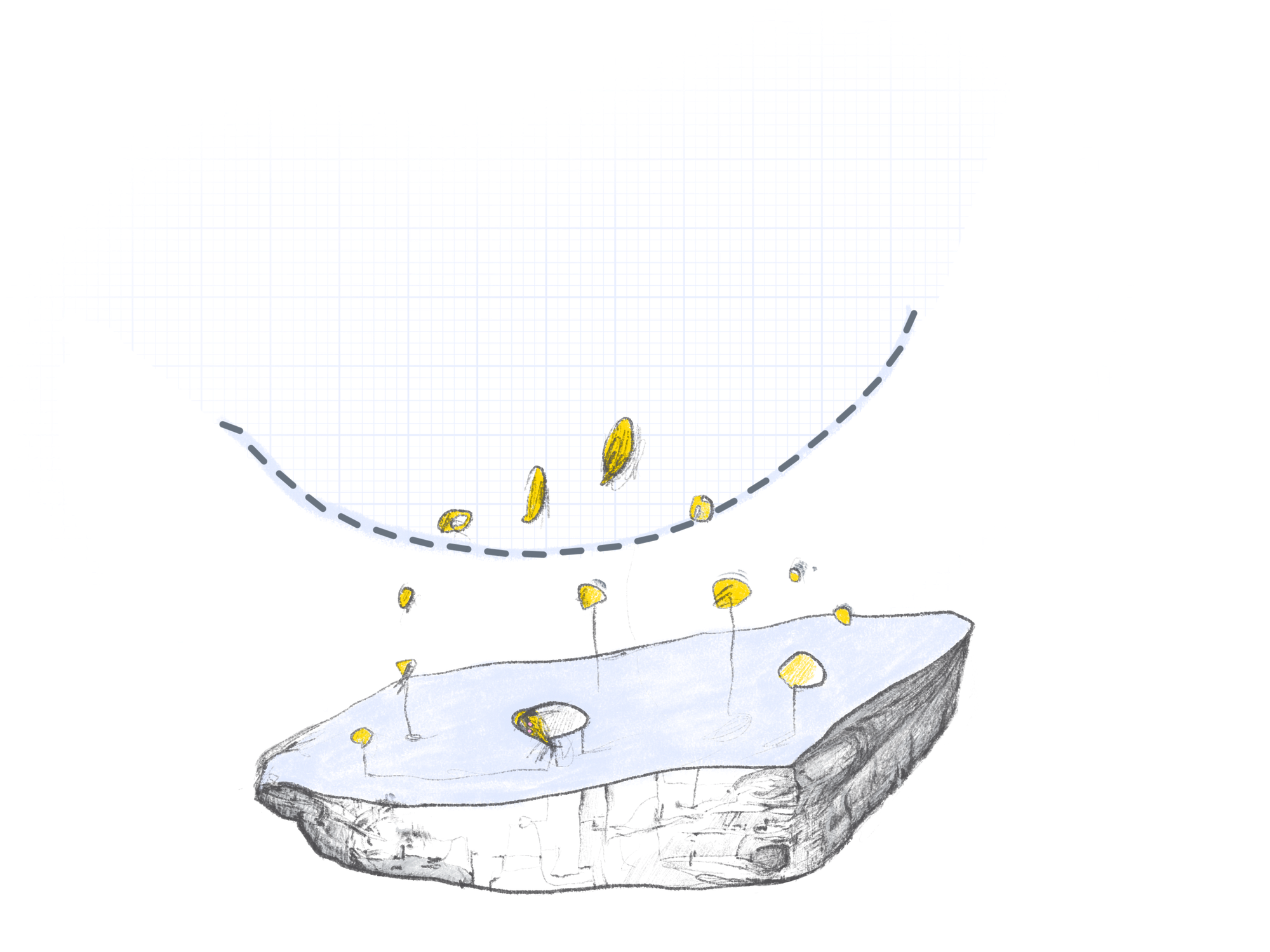
[[ring]] There is an inner ring that at one point in our lives we are inevitably drawn toward. The problem with the inner ring is that once you are actually inside, the entire pressure is to avoid being kicked out.
You understood this very early and tried to avoid any inner circle at all costs, never becoming a teacher or a performer, or a designer, a writer, a manager. Nothing’s somehow fitted.
Until this day.
THE MINISTRY OFFICER: I would like to record the interview. May I?
You sat at one of tables on the inner balcony encircling a cartotech room.
The walls below and around lined with hundreds of small wooden cabinets, drawers and compartments that resembled card catalog systems from old libraries.
There were cozy reading nooks with armchairs and small side tables, large bulletin boards and pegboards with notes.
A large table with several chairs around it and the tabletop made of a thin layer of substrate with active interface, so that you could use it as a huge screen.
Similar screens mounted on the walls, displaying mind maps and diagrams.
There were a few other people working, they did not pay you any attention and you liked it so much.
MIRA MELKO: Of course.
CASTALIAN MONK: In your resumé you mention familiarity with the principles we live by and teach, Ms. Melko. What are the ones you follow? The most meaningful ones?
MIRA MELKO: A certain way to remember, to write a diary.
Instead of describing a real world event or environment I put into words the story or scene it stimulates, reminds of or inspires.
In time, I accumulated a vast amphitheater of interconnected particles for the events and states I find interesting. In the form of story fragments, characters or scenes.
A paracosm, as you call it.
CASTALIAN MONK: What are your use cases for this practice?
MIRA MELKO: While modelling a story or scene, I usually grasp or solve some real world problem, see it from another angle.
This pleasure brings professional insight and professional insight enhances pleasure. Private passion for worldplay influences professional vocation and vice versa.
The more I experience and learn, the better paracosm I have — and the better paracosm I have, the more amusing and easier it is to learn and move, do something — I have intrinsic motivation to expend mental energy.
And that is the key ingredient — the key ingredient not just for important work, but in fact any work or learning.
A sincere interest in something that matters — to be able to fuck around and find out.
Intrinsic motivation is the main problem that supersedes and overrides all other problems of knowledge or important work.
Any advice on personal development is therefore only useful if one is not tired or burned out.
If we really want to fuck around and find out, to study hard what interests us the most in the most undisciplined, irreverent and original manner possible, then we have to feel alive.
To feel wonder and interest.
If you want to build a ship, don't drum up the men to gather wood, divide the work and give orders. Instead, teach them to yearn for the vast and endless sea.
For real change someone has to care.
End of Part 1
PART 2
Chapter 6: Biokovo 2084
Averkije Skila puts on his engine, activates Cusarian diplomatic markers, and disappeares into the skies over Tashkent.
Before Samarqand, he turns into the Fergana Valley and gradually climbs along its southern bank, over to the Alay Range.
In forty thousand feet he pulls the hitherto hidden body parts out of the engine chassis and becomes a needle with stabilizing wing blades.
Above the main massif of the Tian Shan Mountains, Averkije Skila banks into an arc, flying clockwise to the south, towards the Pamir and Hindu Kush.
Then turns north-west and climbs up to one hundred twenty thousand feet, over the Amu Darya river valley, along the border between Uzbekistan and Turkmenistan, towards the Caspian Sea.
Even from this height the forts are visible — the largest reminders of the attention. On Earth, at least.
Architecture like castles, with rooms a few kilometers high and across, with towers reaching up to twenty seven and walls hundreds of meters wide and impossible to penetrate.
The sight of them brings restlesness, doubts about accepting the invitation. There has been no communication between Imeon and representatives of Castalia for eleven years.
Once again Averkije lays out and tweaks models of possible conversation trees and still the same suggestion prevails — it is a good decision, the only decision — the Imeon Foreign Office has to keep dialogue with Castalia and listen to them.
Even if Castalians are the cursed and hated, the accused of attracting a level 3.5 civilization on Kardashev scale.
The feared ones, too — for deciding to fight the entity able to control energy equivalent on the scale of seven galaxy groups.
A civilization trying — athough not yet capable — of instantaneous travel, and short of manipulating the fabric of spacetime.
The drone continues west over the length of Turkey and begins his descent over Istanbul, it could not have been otherwise.
Slowing down, a worried mind perched in the middle of engine murmur.
Averkije admits the trip is a good idea and it is just the fear of responsibility what concerns him. Because this might be the most important meeting of his afterlife.
He arrives earlier at the destination, a small balcony high in the limestone wall of the Biokovo Mountains, looking out at the Adriatic Sea.
The brightness! A dragonfly flies past him, then a wasp, and a bird gets startled. He basks in the strong sun, the height and location, the inaccessibility of the spot.
The slope below him drops hundreds of meters. The patterns of the wind like shapes on the surface of the sea, the clouds. Nowhere does he see a living soul, nor any ship.
A door slides open and a person appears and greets Averkije in English.
It is Alica Selezneva and she helps Averkije unbuckle and park the engine. Though he could have done it alone, they both know well the pleasure he takes in removing the connectors, peeling himself out of the engine shell.
Averkije Skila hasn’t met Alica until after his death, yet he’s always seen her as someone he’s always known. He allows her to be one of the few people to touch him, to caress his titanium-rembirin body for a while.
He rises to Alica’s eye level, and together, beside her head, they enter the mountain. The place where databases, dream logs and documents of many Castalian teachers and the Glass Beads Game players and scholars are kept.
Physical storage of the source materials, slip notes mostly, hundred of thousands small rectangular papers manually hyperlinked into networks of personal, institutional or communal knowledge.
Only in the last century transferred into electronic and later still, into a virtual form. One could immigrate into the library and achieve the highest-order immersion within a local active interface simulation.
In the last decades the library becomes an exile of sorts, too, for all the constructs assembled well enough, so that they could flee the destruction of Waldzell and general persecution of Castalians.
Entities existing in different speeds of time within the local artificial world.
If Alica Selezneva operates in the base reality as the library custodian and liason with outter world — then it is her colleague Anna Akiordeen who can handle such an establishment in the executive librarian position.
Anna is a set-set. A person genetically designed/adapted for certain tasks. Virtually from birth undergoing special training on how to make the best use of potential skills and dormant abilities.
Essentially a living computer, created by setting evolution permanently above the format of normal human norms.
Anna Akiordeen is a specific type of set-set, able to divide herself into several parallel focuses, attitudes and points of view.
This setting of a set is called a vigie, from the French for a lookout on a ship or patrol.
She lives in a network of nodes of hearing, smelling, measured in tens to hundreds — and visually comfortable with seven, ten, and in extreme cases thirteen pairs of eyes.
She can also accelerate, up to two hundred times of base time, so she is able to immigrate and enter the regions of deep constructs.
“I am not a navigator, quite the opposite. I wander around the ship, finding spots from where I observe the ocean. Being aware of the wandering and journey has nothing to do with the position of navigator. And if I am a storyteller, it is because I am listening. For me, being a storyteller is like being a smuggler who smuggles contraband across the border.” she writes in one of the books or documents she is concurrently working on, the despatches from different speeds.
It also means that it takes some time to climb up to the surface of base time. Seven hours max, Alica promises.
Averkije is shown to another and larger balcony meanwhile, with a heavy table shaded from the sun.
He hovers to the balcony’s rim, to stare at the sea and Korčula, Hvar and Pelješac peninsula, losing precious hours.
Alica checks up on the visitor a few times, but they do not talk otherwise — she makes sure that anything that could be said, must be said with Anna in the room.
In six hours, they hear a sound coming out of Anna’s chambers, Lyot Remix by Basic Channel. That’s when Alica starts setting up for breakfast on this larger balcony.
Another hour and Anna Akiordeen slides the balcony door open, smiles at Alica and the globular body of Averkije Skila and greets each of them.
Averkije’s field glows tender pink and orange.
There is affinity, a certain kind of affection — Averkije considers set-sets by far the happiest, most well-adjusted people he’d ever met. While those against argue that they can't be considered living beings because they can’t grow up.
Averkije is one of the few, if not the only tolerated representative of the Cusarian goverment here. He helped orchestrate the whole ordeal to get Anna out of the EU when it becomes tough for set-sets and she can’t make money legally and the debate over whether raising children as set-sets is humane almost starts a war.
He thinks of her as not entirely human, though in a way unlike his own — she was born also artificial, whereas he turned also artificial after death.
Anna must eat first of course, she hasn’t eaten real food in fifteen days. There is no use of rushing the news.
So only after she drinks her first cup of coffee, Anna inquries about the reason of the visit.
“We can get inside, into the last game anomaly, but we must act fast”, Averkije introduces the news he brought from Tashkent.
A few years back the remains of Cusarian officials managed to talk and negotiate with the current rulers of the lands with the venue of the last Glass Bead Game.
To let a pilgrimage enter this area and to find, pick up and bring back the remains of Amalia the last Magister Ludi of the Glass Bead Game from inside the Game venue.
Only recently they received the permission to enter.
The permission is granted at the end of the winter of 2083-2084, but suitable conditions are not expected until the following winter, no earlier than November.
A small window of opportunity presents itself and the Cusarian/Castalian goverment wants to take a chance. Up to seventy hours of temperatures below zero at the end of February forecasted/confirmed, enabling to enter the central play area.
“We are going in,” Averkije says and they all know what he means.
“I need her.”
Alica Selezneva rolls a joint, they smoke it together with Anna Akiordeen and when they finish it, Anna and Alica lead the drone inside the mountain, into the elevator and deeper still, through layers of defense and fields, into the core, where the most treasured artefacts and constructs rest.
In a small anteroom Alica asks them to wait and gets lost behind another door.
Anna looks at Averkije, smiles and tells him: “When she wakes, she will want to write. Help her.”
In thirteen minutes Alica returns with a small rectangular package and Averkije Skila opens the cargo part in his body, where he loads it.
A cubical clump of dried substrate in thin casing with soft edges, holding one of the earliest personality constructs. Locked away, hidden and withered for more than forty objective years.
Like a stone resting in a cave.
Now, for the first and only time, brought out for a ride.
Some ninety years earlier, a part of what would later become Averkije Skila meets the woman whose mind gave birth to the construct.
Chapter 7: November 6, 1992
13:37 - 23:50
Tomáš Benka hears about the Glass Bead Game again.
He returns to Bratislava after a workshop series with Czech colleagues, marking the end of their collaboration ahead of the country and their company separation.
No one is at home to greet him, his wife and their two little boys staying with her parents for the time being. Who can support and help her while he was away. He, in turn, could move through this difficult stretch with as much quiet and strength as possible.
Yet, rather than heading straight home, he drives to Vrakuňa, to the offices of the Institute for Applied Hydrotechnics. He wants to drop off meeting notes and documents and check his mail.
Apart from Mrs. Violka at the reception, the building seems deserted on this Friday afternoon. Through the windows a faint scent of chlorine drifts, coming from the swimming pool next door.
In his mailbox, he also finds an envelope from Comenius University. A visiting Professor Trevor Marr writes, in English, requesting a meeting, a consultation of sorts — regarding his expertise on old roads and maps of Central and Eastern Europe, related to an international project, better to be explained personally — and invites him to a meeting at the Faculty of Law. Tuesday to Thursday between four and six.
If Mr. Benka is interested, or finds it more convenient, he is invited to visit the proffessor’s studio on Friday evening, November 6. Anytime between six and ten. There will be an exhibition and some party within the building that day, too.
Tomáš realizes the letter has waited in his inbox for almost two weeks and that Friday evening is tonight.
In the car, Tomáš finds one more clean t-shirt and socks and pants and grabs a towel, soap, and shampoo.
From the ground floor, through the ping-pong room, he slips directly into the pool building, where he showers.
After, he sorts through papers he accumulated during the Czech trip: meeting files in a folder and smaller A5 index notes in a big shoe box.
He goes through the box, reads the handwritten sentences and then arranges some of the A5 cards on the wall.
Now they create a small mind map — or a few stories — depending on how you read the A5 rectangles, held in position by small rugged magnets.
When satisified with the placement and spatial relations of the notes, Tomáš brews two coffees, carries both downstairs, and beckons/invites Mrs. Violka into a quiet nook sheltered from the wind, warmed by the late afternoon sun, on a bench encircling a patch of grass.
There is a cassete player/receiver CONDOR in the window, tuned to Radio Devín.
They sip coffee, smoke cigarettes, and chat about Mečiar and Klaus and how the end of Czechoslovakia is unfolding.
Just after four in the afternoon, he sets off, along and upstream the Little Danube river, a quiet branch of the Danube.
Tomáš needs a long walk, thousands of steps, to calm his mind and shake off the weight of days crowded with meetings, difficult negotiations.
And possibilities. The professor’s is not the only offer/request Tomáš receives lately.
From Prague comes another: an invitation from Czech colleagues to return to Prague, ask for Czech citizenship and step in as director of a new division at Hydro Engineering Constructions.
If possible, he should let them know within a week or two.
It's just after the recent shift to wintertime, and darkness falls quickly. The moment the sunlight slips away, the yellow leaves of poplars and maples along the water stop glowing, and the air turns cold.
Someone unexpected awaits him somewhere in the city. Soon, he'll step into warmth and into an entirely different atmosphere. Still in the cold for now, but soon among company.
The contrast between temporary solitude and the comforting embrace of shelter makes him shiver.
To lift his mood before arrival, he pauses in Vlčie Hrdlo for a bowl of soup with two rolls, and a Kofola, just by the entrance to the Slovnaft refinery.
It is completely dark when he returns to the path along the Little Danube, until it almost joins the Danube proper, where Tomáš crosses to the other side and heads into the city.
Into vast spaces and long corridors with rooms without clear purpose. An abandoned factory building near the Main Bus Station.
It’s not even seven, but the concert has already begun. Tomáš takes a glass of wine from the bar, promises to return it, and descends stairs to a dark basement, a boiler room maybe, full of smoke and sound, a bit broken rhythms, bass-heavy vibrations.
Those nearest the musicians sit cross-legged on the floor, some sway to the beat. The atmosphere reminds him vividly of London circa 1981-82.
Scans the faces and picks out a face he imagines should belong to the proffesor: grey beard, spectacles, lively eyes, shirt sleeves rolled up.
When the performance ends and people begin to trickle out and up onto the stairs, Tomáš hears a deep voice, accented in Scottish tones.
Approaches him back at the bar and Professor Marr it is — a glass of wine in hand, too — greets Tomáš warmly, extending his other hand for a handshake.
The professor suggests going up to the next floor, to his office/lab, and explains it provides him proximity to intriguing people and places at almost no cost — compared to prices across the river in Vienna, where he’s lived and worked for a decade — but after the fall of the Iron Curtain begins a research project and starts teaching two courses in political law at Comenius University.
The professor draws a bottle from a small fridge and explains the backstory to this meeting — it begins with an old friend contacting him a few weeks ago, a cartographer from Cardiff.
That friend was approached by a certain legal scholar. Her name is Doctor Ursula Perhonen.
He pours them more wine and continues — she wants to embark on a long distance bicycle tour and needs help with route planning in Eastern Europe.
She is looking for someone to suggest/help plan a route through Czechoslovakia — possibly extending into Ukraine — following ancient roads where possible. Middle ages and older.
Planning to travel April to June next year.
The cartographer friend from Cardiff mentions Professor Marr as a local contact, and suggests doctor Perhonen shall consult with him directly.
Perhonen does and they exchange a few emails and Professor understands how important, not only interesting, the expedition will be.
Perhonen’s destination is the pedagogical province of Castalia, a secluded high plain in South Caucasus.
Until the collapse of the USSR it used to be an autonomous region of the Cusarian Soviet Socialist Republic.
A monastery/university to provide teachers to the lands between the Black and Caspian sea since the Middle ages.
Where an ancient ritual is going to take place.
A certain game, with ideas and memory objects as game pieces, which old rulers used to determine offices and political status.
The Glass Bead Game.
After a few centuries open to the state and commercial players, playing for offices, roles and political status within the whole region.
And Doctor Perhonen is invited to be one of the arbiters of the finals of the Game, where the winner will be determined — Magister Ludi.
Ursula Perhonen is a rare type of lawyer — not only a political law expert, she also understands the Glass Bead Game in legal terms — she knows how to translate its play and the results into policies, and connections.
Besides the pure legal spectacle standpoint, the legal beauty of the Game, Professor explains, he expects this revival will influence geopolitics.
Cusarian republic is a gate to Asia, the borderline, the margin between the seas, between Russia, Central Asia and Europe.
Anytime in the past when the Glass Bead Game was part of the governance/ruling system, Cusaria belonged to the most powerful players in the region.
And that young academic from the University in Jena might become a powerful actor soon.
So of course the professor promises to help Doctor Perhonen find an expert on old roads.
After a few inquiries around the university, one name keeps coming up: Tomáš Benka. Some of the colleagues have been following his work, read his articles about old roads.
Tomáš feels tired all of a sudden, his lips dry, has to sit down — Professor continues about Russia and Iran, international law, Cusarian and Castalian exulants.
Fortunately some visitors appear, urging them to head out to an afterparty, but Tomás excuses himself — there is a train he has to catch in the morning.
Before they part ways, Professor Marr writes down a phone number for him to call his home, after Tomas has had time to think it over.
Tomáš promises to get in touch, and soon he is out in the streets, taking a tram home.
An hour later, lying in bed, Tomáš cannot fall asleep, alcohol and the events buzzing in his head.
He gets up and rummages through drawers until he comes across his older brother’s diaries and finds a passage prediciting that The Glass Bead Game rising to power in the digital age will mark a milestone leading to the sort of things most civilizations encounter just once, and which they tend to encounter rather in the same way a sentence encounters a full stop.
However, it is vital for the Game and the forces/ideas around to become strong and influential.
The forces/ideas both enabling and saving us from the end of the universe as we know it.
Chapter 8: November 7, 1992
00:09 - 09:21
Although few people in the country know what email is, Professor Marr, already familiar with the early internet in Vienna, has a modem installed in his apartment and around the same time Tomáš Benka tries to fall asleep, the professor connects the modem to the phone line at home and dials into the university server via SANET, the Slovak academic network that links universities and research institutes, enabling early file sharing and email.
Using the text-based client Elm, he sends a brief email to Ursula Perhonen. He confirms meeting the old roads expert, who expressed willingness to discuss the route planning further. More details next week hopefuly.
The connection is smooth, the message passes through the node at the Faculty of Arts, Comenius University, links to an international line and is delivered to the mailserver at Friedrich Schiller Universität in Jena, where Dr. Ursula Perhonen retrieves it in the morning.
Starting the spring of 1992, she catches murmurs at conferences and opinions in academic publications — the next year’s Glass Bead Game is going to be open, for the first time since eighteen’s century and players outside of Castalia may participate in the basic rounds.
State institutions and even some commercial organizations are planning to hire and assign roles based on outcomes/proficiency with the Glass Bead game.
Maybe even more importantly, the best player — the next Magister Ludi — was to get an important position in the Cusarian executive goverment, to help building COS, The Cosri Operational System.
The political/public, cultural and business leaders are planning how the Glassbead Game could be incorporated into the country's legislative. Again.
Foreign high profile political representatives are to be invited to see in practice what such a game looks like in its most refined phase.
She has been tracking various declarations and predictions ever since — with emigrants, exiles, and experts from all over the globe planning to attend the Game and some already setting out on their journeys.
Soon, the rumours are confirmed and Ursula Perhonen gets involved, too.
In early October 1992, she receives a letter from Castalia — an offer/invitation to become one of the Arbiters.
Obviously, the approaching Game means a lot to Castalians.
To achieve trust and fair play, the administration in Castalia has decided to select and invite five arbiters — independent authorities, sufficiently educated and skilled in the principles and rules of the Glass Bead Game and Castalian methods.
As a leading scholar on Castalia and the Game, Perhonen becomes one of the invited, to attend the final Game to be played in Waldzell, the capital city of Castalia.
The invitation alone carries immense significance and honor — but the full terms of her visit unsettle her.
She is not only named arbiter of the Glass Bead Game, but also encouraged to contribute to the Waldzell amphitheater, the largest and oldest in the whole world. The spatial heart of the Lexicon Cosri.
She is free to choose the form, style, and placement of her offering — be it an exogram, a glyph, or a syzygy.
This part gets her: to prepare for the best placement, she is granted a solitary passage through the amphitheater.
She can have the the main node of the Lexicon Cosri for herself, alone and undisturbed for thirteen hours.
To wander, reflect, and play within this spatial object, architecture.
A horseshoe around the city of Waldzell, gently sloping landscape, with thousands of terraces and structures arranged throughout the area.
Layout built over centuries, spread over fifty square kilometres, with forms capturing attitudes, evolution of ideas and ideologies, life experience or pure data.
On a static level, the amphiteater functions as a library or a categorization system — but the amphitheater’s purpose isn’t only to archive, to remember.
It is knowledge medium and a workspace at the same time.
It is designed to be walked in — to be experienced in sequence of space, time and attention — to influence the viewer by touring a certain order of the items.
The dictionary entries, Lexicon Cosri Particles.
In fact, one of the main reasons Ursula Perhonen receives the invitation — and the generous offer to have the amhiteater to herself — is her book about jogging the mind, stimulating the mind and helping it generate unexpected and powerful ideas as the key function of Castalian amphiteaters.
She argues attuned and aware walkers within the amphitheater can reach breathtaking insights and revelations thanks to the sequence in which they encounter the objects within the landscape.
Perhonen claims the amphitheater can extract thoughts and transfer the mind to entirely new regions of conceptual space — much like exposure to drugs, dreams, meditation, Tarot readings, mistakes.
She describes how these insights typically emerge at the intersection of two or more seemingly unrelated fields, concepts, or images.
It is possible, as Perhonen writes, to activate a movement of perpetual oscillation that brings the memory to be an instrument of knowledge, in one direction, and to catalyze the creation of new memory, in the reverse motion.
Recently, she has been developing these ideas into a series of articles/essays Where Time Becomes Space: Moving Through the Castalian Amphitheater, where she writes about the sequential immersion as one of the key ways to understand the power of the Lexicon Cosri and thus harness the power of the Glass Bead Game.
One of the arguments Perhonen develops is that a digital version of the Lexicon Cosri and its amphiteaters would be even more powerful, because you can move through virtual space much faster.
Which is why she argues for starting its digitization — and by digitization, she also means the dictionary as a whole, all the archives and libraries.
She has already tested these ideas in a few talks/conferences and received great feedback so far.
The invitation from Castalia being the best one.
To read and contribute to the Lexicon Cosri makes Ursula Perhonen dizzy.
The opportunity to walk and pay attention wherever she wishes, building her own story of the Cusarian Lexicon, extracting her own insights, asking and following her most important and intimate questions.
To confirm the legends of Princess Ateh.
Or at least find out more details about them.
She is aware this trip needs serious preparation and will be like nothing she has ever done before.
Although is is Saturday morning, Perhonen rides her bicycle to the Faculty of Law at Carl‑Zeiß‑Straße 3, to read and answers emails, to work on her expedition to Castalia.
She already communicates with a Scottish professor based in Bratislava, Czechoslovakia, regarding the maps and routes expert — and expects an email from him.
Now she downloads and opens emails and there it is, one of them confirms the expert showed up.
Chapter 9: November 7, 1992
09:21 - 18:30
While Ursula Perhonen munches on carrots and reads Professor Marr’s email, Tomáš Benka is boarding a train.
On his way to help his friends from the Slovak Academy of Sciences with research for the international project Reaction of the Fluvial System to Large-Scale Changes in Land Use, focusing on the basin of the Jablonka River in the Myjava Upland.
He has commited to the project a long time ago and his sense of duty does not allow him to cancel the trip, no matter how tired and strange he feels.
Today, the plan is to explore and map Vaďovská borina, with particular emphasis on the geomorphological response to environmental changes.
His role is to contribute as a hydrologist with expertise that expands into geomorphlogy and cartography.
There are three other people traveling with him — Oľga the geologist, Jozef the enviromental historian and one new face, a photographer.
A student of English and Journalism, she also loves photography and building bikes, mentions helping out with a cycling association, introduces herself as Mira. Mira Melko.
Tomáš asks her how good bicycles can be in terrain, like what gradients would you be able to traverse? He is aware of mountain bikes, but haven’t tried any yet.
They’re good, Mira confirms — 2.2 inches wide knobby tread wheels and the seven or eight gears of the modern mountain bikes can handle decent terrain.
And why, she asks.
Tomáš explains there is a person that plans to travel from Germany to the Caucasus — by bicycle — looking for a route using old roads. The older the better.
And he is a bit worried whether she can manage the old roads in Carpathians.
Why does he care?
Because he is the one to suggest the route and provide proof of its origin.
She asks if Tomáš has particular old roads in mind.
He smiles, because this is a topic he could talk about for hours.
About old roads, structures as amazing as old churches. Technological, communication and civilization monuments. Buildings that have been used for centuries, thousands of years. How many such buildings are there?
A few, he answers, but it needs some further consideration — and means it like the most beautiful task ever.
His eyes must shine.
Oľga the geologist notices and asks about the destination, why Caucasus, where exactly does she plan to go. She has been to this mountain range, made it to Elbrus even!
To Castalia, Tomáš explains, but no one is really sure they know what he means.
It used to be a province of the Cusarian Soviet Socialist Republic.
It has been home to an order of intellectuals with a twofold mission: to train teachers for the regions between the Black and Caspian sea — and to cultivate and play the so called Glass Bead Game.
Basically a community of monk-like schollars, living on a plateu surrounded by the foothills of the Caucasus.
Jozef the enviromental historian remembers he has read something about Castalian methods, about their special attitude towards imaginary characters.
Yes, Tomáš confirms, Castalian teachers consider playing with imaginary worlds — calling it a worldplay — valuable preparation for any profession, not just to artists or scientists, but to people of more ordinary talents as well.
Tomáš uses a word paracosm, when decribing a detailed imaginary world.
In general, it is assumed that paracosms originate in childhood and have one or more creators and they have a complex and deeply felt relationship with this subjective universe.
It usually has its own geography, history, and language and may include real or imaginary characters and conventions.
It is an experience that often develops in childhood and continues over a long period — months or even years — as a sophisticated reality that can persist into adulthood.
Actually, the Castalian teachers recommend that using a paracom — as a sophisticated reality — should persist into adulthood, for ever.
Also, to become a better player of the Glass Bead Game.
Listening to this, Mira Melko feels extremely intrigued.
Just a while ago, during the summer and before the first semester of her freshman year at Comenius University, she begins seeing scenes and characters from an imaginary world she creates around the age of five, but abandons a few years later.
It starts with remembering a game she used to play when bored: closely watching some surface up close and slowly changing the scale and context — squinting a bit, until an oak tree bark looks like mountain ranges viewed from space.
The cracks in bark become gaps/furrows wide as a trip from Earth to the Moon and suddenly she recalls the Jumpers, mysterious tribe trying to get to the other side in little cousy balls, catapulted from a massive slingshot.
She feels flying herself — a Jumper in a soft and safe structure in the clouds — for days, even weeks alone, moving on arched trajectory.
But it isn’t her, it is another Jumper, their background story blooming, opening up the more she imagines/thinks of them.
Sometimes Jumper is a girl, but usually a boy. Also the reasons differ, why they embark on such a journey, how dare they to jump.
At first, Mira jotts a few notes only, names of long forgotten characters and a situation that brings them back.
But she keeps recovering different parts and story lines almost everyday — during afternoon walks to dormitory, small trips around Dúbravka and Devínska Kobyla or longer bike rides along the Danube river.
She notices how different settings trigger, unlock or just echoe certain characters, storylines or places — how specific locations/atmospheres enable/amplify different scenes or actors.
Certain parts of old town, oak woods of Kobyla, prefab flats in Petržalka and views from them — or how meadows and traveling by train or by bicycle brings another type of images or storylines.
She starts writing more, two-three hours per day. On paper — small notebooks, blank A4s — but also using a computer for the first time in her life. Working with text editor, which is mind blowing in itself.
But she never finishes any of the stories or histories of her imaginary people, ideas and lands. Because she believes that if one writes the story to the end, the story disappears.
Mira has not the slightest desire to participate in such a waste. She plans to keep the stories with her forever, let nothing happen to it.
She does not want to use up the characters — in one story, in one possibility, in a closed ordering and causality.
Considers fixing the imaginary world in one linear sequence the end of entertainment/joy as she knows it.
By linear she means a certain sequence of ideas/acts, as in a theatre play — arrangement and passage of elements in time.
She does not want to be a published writer either, never liked the idea. She just wants to make things that aren't tied to some externalised commodity form to be consumed and appraised by the rest of the world.
How devoted she feels, how important it feels, to salvage and restore as many aspects of her imaginary world as possible and explore how useful they might be.
Mira Melko thinks she can keep up the writing sessions, the archaelogy routine — for months, for ever if needed.
But September turns to October and she realizes what studying plus earning money to keep her in the capital city means.
Besides school assignements, she teaches basic English. Also gets involved in a cycling club/association — first just to use their garage to fix her bike, soon interested in how to do signage, maps and information panels, a kind of a proto UX design role.
Also don’t forget she can borrow stunning Canon EF 50mm f/1.8 lens from the association now.
She keeps returning to the imaginary world less and less. Rationalizing to her self why she has no time for this pet project.
At times panicking and trying to catch up, feeling sad how much time is needed to properly pay attention.
So it hits Mira profoundly when the hydrology/geomorphology expert she travels with on the train to Nové Mesto nad Váhom mentions that there is a whole culture based on playing with imaginary worlds and someone is going to cycle to an ancient and important ritual, whose principles involve the practice of worldplay.
There are years that ask questions and years that answer, Mira Melko thinks and shares aloud that she’s got her own made-up world, too.
And reveals that now she understands why she’s never felt like putting the characters and the scenes in a sequential order of a story.
They are meant to be a memory system.
A network of interconnected particles to be used as cues or bridges to the events, epiphanies and knowledge one finds interesting and/or important.
The hydrology and cartography expert seems moved or somehow impressed, that she’s arrived at the same conclusions as the core of a method developed/practiced since the 10th century.
A method practically unknown in Europe beyond a small circle of scholars.
Although that is about to change.
Chapter 10: 1993
In the second half of January 1993 the qualifying rounds of the Glass Bead Game start, consisting of some 12,000 players in the main series.
First official information reach media.
The country of Cusaria to start incorporating the Game into its legislative and governing processes — a game based on more than a millenium old system of philosophy, visual and/or soun art, mathematics and governance.
A game representing reality to such a degree, that a player's own skills and philosophical outlook can be expressed in play. So rival ideologies and different knowhows could be tested before the winners apply them in reality.
There will be arbiters overlooking the final game, which determines the Master of the Game for the next four years — and one of the arbiters comes from Europe.
Doctor Ursula Perhonen agrees to interview requests, happily answers and decribes the importance of Castalian system in a way that attracts further attention and exposure.
Also mentions her plan to travel by bicycle, to work along the way, to prepare for the final Game.
She revels/believes in networking, considers communication and brand ever so important. Yes, Perhonen has always been a great politician, not only a scholar.
The growing demand for talks and meetings leads Perhonen to search for a guide, translator and a tour manager in one, preferably female.
Her first choice is Timrava.
A frequent research collaborator, a location scout for state television in Berlin, who taught her how to traverse landscape on her own, either on foot or by bicycle.
Though born in Germany, Timrava has a Slovak mother, a Ukrainian father, and speaks Hungarian, too.
But she has an accident. Avoiding a dog, she hits a muddy patch and crashes her road bicycle in downhill speed. Hip injury, cannot walk for at least three months.
It is early March and there are only a few weeks left before the scheduled start of the bicycle tour, with fourteen already booked stops/talks by the invited arbiter, Dr. Ursula Perhonen of Jena University. A few more to be confirmed.
She considers taking the easier routes to the Western shores of the Black Sea, along the rivers. Elbe, Morava, Danube.
It might be Timrava who encourages Perhonen to go forth with the more difficult path, the one more suited to Perhonen’s plan. More demanding, but far more meaningful.
What matters most? Perhonen asks herself. What requirements must be met?
The remote, at the edge of civilization. The seldom visited. The ridgelines and mountain passes, where the Cusarian refugees left marks along the way of their escape from the wars around the 12th century and later, to many parts of the world.
She wants to visit these fragments of meaning left behind.
Overlooked, overgrown, half-forgotten. Remnants of what was once careful work. Subtle alterations in the land’s shape, stonework and construction embedded to preserve meaning.
Not monuments in the traditional sense, more like a cross between land art, totems, and a traveler’s journal.
Definitely not for fortification or shelter.
Fragments of an architecture meant to remember.
But if Perhonen wants to follow this route, she must now let go of independence.
While reviewing insurance terms with the Cusarian and Castalian offices, the expected arbiter is gently but firmly advised to avoid unnecessary risk — including travelling alone in remote areas.
She is under legal obligation now, bound by a work contract, she understands.
And the favored route includes difficult terrain — forest tracks, river crossings, places where one must lift or push the bike over obstacles, where mutual/present help means safety.
So the key people involved are consulted. They are informed about Timrava’s injury. Route changes and revised plans are under discussion.
One of the consulted few is Tomáš Benka, the expert from Czechoslovakia.
Until now, they have been discussing routes — basically the entire way from Jena, through the Šumava mountains, then along the southern Czech border, through the Sudeten region and Carpathians.
So they would follow the same routes by which the exiles once arrived and can visit the most sites.
At that stage, they communicate twice a week, exchanging questions, making adjustements to locations, refining the plan.
Perhonen prepares a longlist of sites and routes, often based in just mentions or hints, old diagrams and imprecise maps — evidence of interventions and terrain modifications along the way the Cusarian or Castalian exiles have left their homelands.
Tomáš traces and maps the sources that Perhonen provides into the current landscape.
Now, the announcement threatens to erase weeks of research and coordination.
Tomáš drops by the cycling association, and leaves a message for Mira Melko.
Each time they’ve met in the past three months, at the SAV project meetings or in the field, Mira brings up Perhonen’s bicycle tour and she turns into a trusted consultant for planning the route. Tomáš must share the news with her.
She replies within three hours, she calls him that evening.
She wants to go. She needs to go.
Tomáš Benka informs Perhonen of a suitable guide if still interested/so inclined.
Someone he can vouch for. Willing to join her for the entire crossing of the newly formed Czech and Slovak republics and even beyond, if needed.
A strong cyclist and a skilled bike mechanic. Capable of riding in uneven terrain, translating/interpeting to/from English and sleep outside if the situation calls for it.
She studies journalism and English, but also a natural organizer.
But what he thinks makes her truly suitable is something else: she places great importance on memory and has an imaginary realm of her own — someone who understands the significance of the dynamic between the imagined and the real.
Two calls later, young Mira Melko becomes the companion, translator/interpreter and tour manager of a German-Norwegian lawyer and legal scholar Doctor Ursula Perhonen, on her bicycle journey to the annual Glass Bead Game of 1993.
If you’ve made it all the way to here, please write me an email and answer two questions:
- What would you be mad if I deleted?
- What are the parts you definitely want to hear more?
Part 3 to be published February 2026 - subscribe to the newsletter to find out more & when.